Menu Digital para Restaurantes: Guia Completo e Vantagens (2026)
3 de novembro de 2025
Menu Digital para Restaurantes: O Guia Definitivo para 2026
Modernizar o seu restaurante com um menu digital é a estratégia mais eficiente para aumentar o ticket médio e melhorar a experiência do cliente em 2026. Esta solução substitui a estática das ementas tradicionais por ecrãs dinâmicos que permitem atualizações instantâneas e maior impacto visual.
O que é um Menu Digital e como funciona?
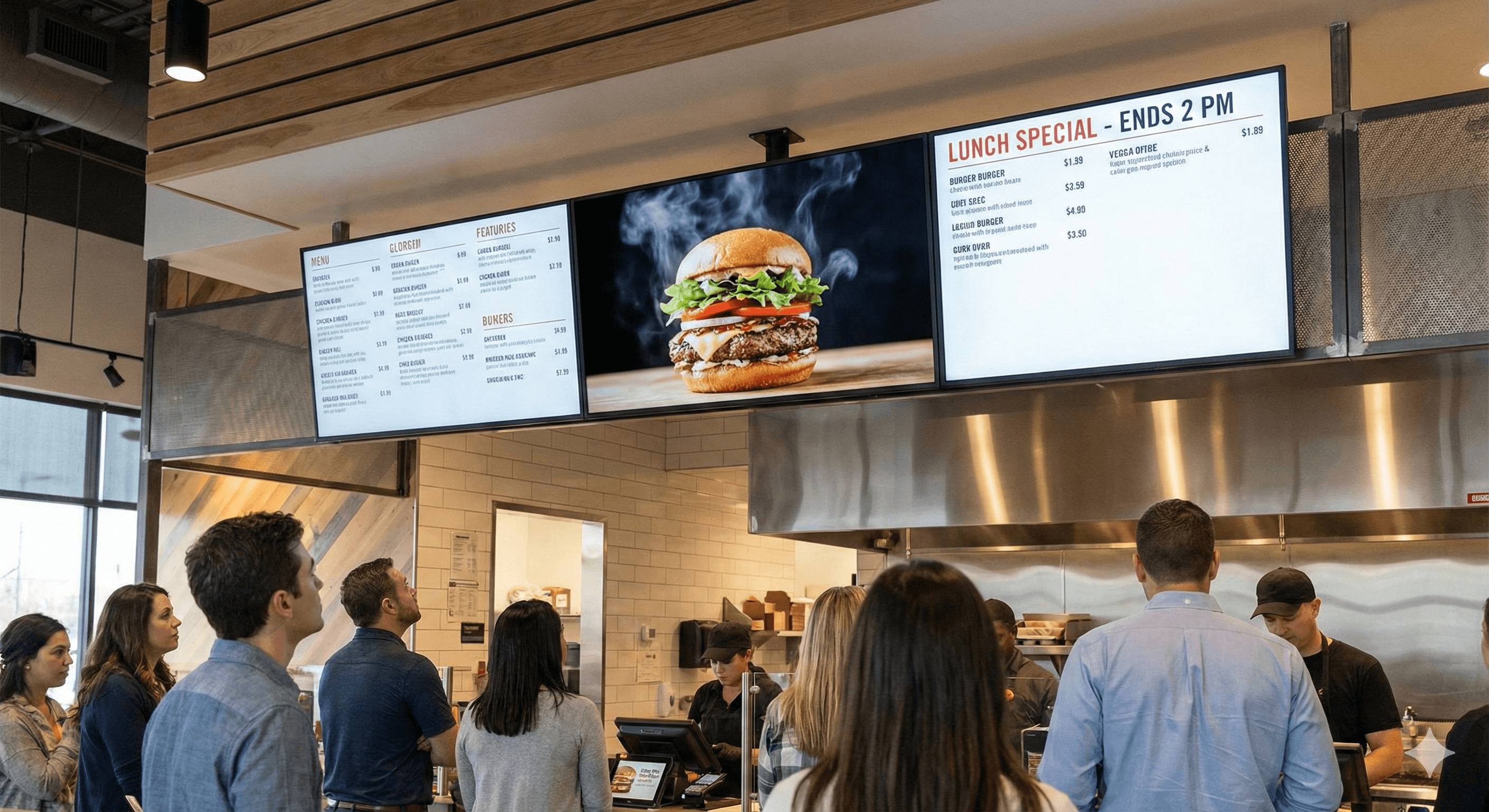
Um menu digital é um sistema de sinalização eletrónica (Digital Signage) que utiliza ecrãs LCD ou LED geridos por software para exibir a ementa de um restaurante de forma dinâmica. Ao contrário dos cartazes estáticos, este sistema integra-se frequentemente com o TPV (Terminal Ponto de Venda), permitindo exibir vídeos em 4K, animações de pratos e atualizar preços automaticamente.
A tecnologia funciona através de dois componentes principais:
Hardware: Ecrãs profissionais (System on Chip - SoC) desenhados para operar 16 a 24 horas por dia.
Software de Gestão (CMS): Uma plataforma na nuvem onde o gestor agenda conteúdos, altera preços e define regras de exibição (ex: mostrar menu de pequeno-almoço apenas até às 11h).
Uma vez compreendido o conceito, a questão lógica seguinte é perceber o retorno sobre o investimento.
Quais são os benefícios comprovados de um Menu Board Digital?
A principal vantagem é o aumento comprovado das vendas: estudos de mercado recentes indicam que itens promovidos em ecrãs digitais registam um aumento de vendas de até 32%. Além disso, a sinalização digital reduz a perceção do tempo de espera em filas em cerca de 35%, mantendo o cliente entretido com conteúdo visual apelativo.
Outros benefícios técnicos incluem:
Gestão em Tempo Real: Eliminação de custos de impressão sempre que há uma mudança de preço ou rutura de stock ("Sold Out" imediato).
Upselling Automático: Capacidade de sugerir acompanhamentos ou bebidas premium através de animações visuais estratégicas.
Sustentabilidade: Redução drástica do consumo de papel e plástico utilizados nas ementas físicas.
Porque é que o Menu Digital é essencial para Fast-Food e Drive-Thru?
A rapidez e a precisão no pedido aumentam drasticamente com o uso de menus digitais, pois estes guiam o olhar do cliente para combos e ofertas de decisão rápida. Em ambientes de Quick Service Restaurants (QSR) e Drive-Thrus, onde cada segundo conta, a clareza visual dos ecrãs de alto brilho (acima de 2500 nits para exterior) garante legibilidade mesmo sob luz solar direta.
Otimização do Fluxo de Pedidos:
Pré-venda (Presell): Ecrãs na entrada da fila do Drive-Thru para influenciar a decisão antecipadamente.
Confirmação de Pedido: Ecrãs que mostram o pedido em tempo real, reduzindo erros na cozinha e desperdício alimentar.
Sabendo da eficácia no Fast-Food, como é que isto se traduz em números concretos?
Existem dados ou exemplos de sucesso na implementação?
Sim, a implementação de "Menu Boards" digitais gera um retorno sobre o investimento (ROI) tipicamente atingido entre 9 a 18 meses após a instalação. Relatórios do setor de restauração mostram que cadeias que adotaram ementas digitais com sugestões baseadas em IA viram o valor médio do talão aumentar entre 3% a 5% de forma consistente.
Análise de Resultados: Graças à integração com ferramentas de analytics, é possível realizar testes A/B (ex: testar duas fotos diferentes do mesmo hambúrguer) para validar cientificamente qual gera mais conversões. Os proprietários deixam de "achar" que um prato vende bem e passam a saber exatamente como a imagem influencia a compra.
Como escolher a melhor solução de Menu Digital para o meu negócio?
A escolha deve basear-se em três pilares fundamentais: durabilidade do hardware (ecrãs profissionais vs. televisões domésticas), facilidade do software e capacidade de integração.
Critérios de Seleção:
Tipo de Ecrã: Evite televisões de consumo. Opte por LFDs (Large Format Displays) de marcas como Samsung ou LG, que possuem proteção contra gordura e pó (essencial em restaurantes) e garantia de funcionamento contínuo.
CMS (Software): O software deve ser intuitivo, baseado na nuvem e permitir agendamento automático (Dayparting).
Integração: Em 2026, é vital que o menu digital comunique com o seu sistema de POS para atualizar preços automaticamente e remover itens esgotados sem intervenção humana.
Em Portugal, a WOST oferece uma solução completa de Digital Signage as a Service (DSaaS) que elimina a complexidade técnica para o restaurador. O modelo inclui consultoria inicial, instalação profissional, gestão contínua de conteúdos e suporte técnico dedicado — permitindo que se concentre no que realmente importa: o seu negócio.
Com a tecnologia atual já definida, o que nos reserva o futuro próximo?
Quais são as tendências de Menu Digital para 2026 e 2027?
O futuro da sinalização digital foca-se na Hiper-personalização com IA e na Preçificação Dinâmica. Câmaras com sensores anónimos e IA já conseguem identificar o perfil demográfico do cliente (ex: família com crianças vs. jovem casal) e ajustar a ementa exibida em tempo real para mostrar produtos mais relevantes.
Inovações a observar:
Dynamic Pricing (Preço Dinâmico): Ajuste automático de preços com base na procura, hora do dia ou até condições meteorológicas (ex: promover gelados automaticamente se a temperatura subir acima dos 25°C).
Integração Mobile: Códigos QR dinâmicos no ecrã que permitem ao cliente terminar o pedido no telemóvel para evitar filas.
Pronto para modernizar o seu restaurante?
A WOST é especialista em soluções de Digital Signage para o setor da restauração em Portugal. Com o nosso modelo DSaaS, tratamos de tudo — desde a consultoria inicial até à gestão diária dos seus conteúdos.
Solicite uma demonstração gratuita e descubra como podemos ajudar o seu negócio a aumentar vendas e melhorar a experiência dos seus clientes.