Guia Sinalética Digital 2026: Tipos de Displays e Ecrãs
23 de janeiro de 2026
Guia de Sinalética Digital 2026: Tipos de Displays e Ecrãs para Empresas
A sinalética digital é a evolução tecnológica da comunicação visual, permitindo às empresas transmitir mensagens dinâmicas através de tipos de displays e ecrãs digitais conectados. Este guia atualizado para 2026 analisa as tecnologias de visualização disponíveis para ajudar gestores a maximizar o ROI e o engagement.
O que é a Sinalética Digital e porque é vital em 2026?
A sinalética digital consiste na utilização de ecrãs eletrónicos (como LED, LCD ou projeção) para exibir conteúdos multimédia geridos centralmente em espaços públicos ou privados.
Em 2026, esta tecnologia deixou de ser opcional para se tornar crítica: o mercado global mantém um crescimento anual superior a 10%, impulsionado pela integração de Inteligência Artificial que personaliza anúncios em tempo real. Para os empresários, adotar um guia sinalética digital robusto significa transformar tráfego passivo em vendas ativas através de experiências visuais imersivas.
Compreendido o conceito, a questão seguinte é: que hardware escolher?
Que tipos de Ecrãs Digitais existem no mercado?
Os principais tipos de displays dividem-se em cinco categorias tecnológicas: LCD, LED, OLED, MicroLED e E-paper, cada uma com uma finalidade distinta baseada no ambiente e orçamento.
Abaixo, detalhamos cada tecnologia para facilitar a sua decisão.
LCD (Liquid Crystal Display): Ainda é a norma?
Sim, o LCD continua a ser a opção mais comum para ambientes internos devido ao seu baixo custo inicial e alta resolução.
Estes ecrãs utilizam retroiluminação (geralmente LED) para iluminar cristais líquidos. Embora os modelos IPS modernos ofereçam boas cores, o contraste é inferior a tecnologias autoemissivas. São os "cavalos de batalha" para menus digitais (menu boards) e comunicação corporativa.
LED (Light Emitting Diode): O rei do exterior?
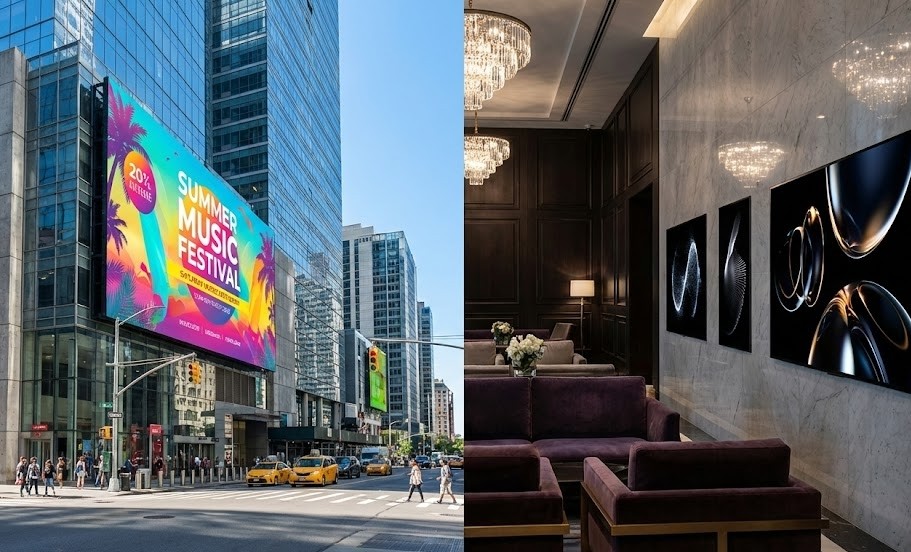
Absolutamente, o LED é a tecnologia padrão para sinalética digital exterior e grandes formatos devido ao seu brilho superior que combate a luz solar direta.
Diferente do LCD, o LED direto usa díodos individuais como pixéis (Direct View LED). São modulares, permitindo criar paredes de vídeo (video walls) de qualquer tamanho sem molduras visíveis. A sua durabilidade torna-os ideais para operação 24/7 em fachadas e outdoors.
OLED (Organic LED): Quando usar?
O OLED deve ser usado em ambientes premium onde a qualidade de imagem e o design ultrafino são prioritários, como boutiques de luxo ou museus.
Como cada pixel emite a sua própria luz, o OLED oferece "pretos perfeitos" e contraste infinito. Contudo, em 2026, ainda requerem cuidado com imagens estáticas prolongadas para evitar "burn-in" (retenção de imagem), embora o software de gestão moderna mitigue este risco.
MicroLED: Vale o investimento em 2026?
O MicroLED é a tecnologia de topo para quem procura o brilho do LED com a qualidade do OLED, mas o custo permanece elevado.
Esta tecnologia emergente combina a durabilidade e brilho extremo do LED inorgânico com a precisão de pixel do OLED. É a tendência dominante para flagship stores que desejam longevidade superior e eficiência energética, sem os riscos de burn-in.
E-paper (Papel Eletrónico): É apenas para leitura?
Não, o E-paper moderno já suporta cores (ACeP) e é a solução mais sustentável do mercado, consumindo energia apenas quando a imagem muda.
Perfeito para horários de transportes, etiquetas de preço e avisos públicos, o E-paper oferece legibilidade total sob luz solar (bistável). Com as normas ESG mais rígidas de 2026, esta tecnologia ganhou tração por permitir instalações sem cabos de alimentação complexos (muitas vezes a bateria ou solar).
Sabendo as tecnologias, como se comparam diretamente em performance?
Comparativo: Qual o melhor Ecrã para o meu negócio?
A escolha do ecrã digital depende do equilíbrio entre localização, qualidade de imagem e consumo energético.
Tipo de Display | Aplicação Ideal | Brilho (Nits) | Eficiência Energética | Custo Inicial |
|---|---|---|---|---|
LCD/IPS | Lojas, Salas de Reunião | 300 - 700 (Moderado) | Média | Baixo ($) |
LED (DV) | Outdoors, Montras, Estádios | 1.000 - 10.000+ (Alto) | Alta (por lúmen) | Médio ($$) |
OLED | Museus, Retail de Luxo | 400 - 1.000 (Médio) | Baixa (em brancos totais) | Alto ($$$) |
MicroLED | Fachadas Premium, Lobbies | > 2.000 (Muito Alto) | Muito Alta | Muito Alto ($$$$) |
E-paper | Transportes, Wayfinding | Reflexivo (Lê-se ao sol) | Excelente (Zero estático) | Médio ($$) |
Além do hardware, o que dita o sucesso da sinalética no futuro próximo?
Quais as Tendências de Sinalética Digital para 2026?
Em 2026, o software de sinalética não apenas "passa um vídeo"; ele reage. Sensores e câmaras (respeitando a privacidade) ajustam o conteúdo do ecrã baseados na demografia da audiência ou até nas condições meteorológicas. Além disso, a eficiência energética ("Green Signage") tornou-se um critério de compra decisivo. Para captar tráfego de pesquisa, recomenda-se focar em termos como "ecrãs interativos sustentáveis" na sua estratégia de conteúdo.
Conclusão
Dominar os tipos de displays é o primeiro passo para uma estratégia de sinalética digital eficaz. Quer opte pela versatilidade do LCD ou pela inovação do MicroLED, a tecnologia certa elevará a perceção da sua marca.
Está pronto para modernizar o seu espaço? Contacte especialistas em integração visual para avaliar a melhor solução técnica para o seu cenário específico.