MUPI: Tipos, Tamanhos, Preços 2026 (Papel + Digital)
6 de setembro de 2023

O Que é um MUPI? Guia Completo de Publicidade Exterior (Edição 2026)
O Mupi é o suporte de comunicação mais antigo do mundo – e um dos mais populares entre marcas e consumidores. Neste artigo técnico, analisamos a definição de MUPI, sua evolução para o digital (DOOH), as medidas padrão de mercado e as estratégias de conteúdo para maximizar o retorno sobre o investimento publicitário.
O que significa a sigla MUPI?
MUPI é o acrónimo francês para "Mobilier Urbain Pour l’Information" (Mobiliário Urbano Para Informação). O termo, registado originalmente em 1977 por Jean-Claude Decaux (fundador da JCDecaux), tornou-se um nome comercial generalizado utilizado globalmente para designar estruturas de publicidade exterior ao nível do olhar. Em inglês, é frequentemente referido como City Light Poster ou Street Furniture.
Apesar de a marca pertencer à JCDecaux, o termo "mupi" é hoje a designação padrão em Portugal tanto para o suporte físico (mobiliário urbano) como para o formato publicitário, abrangendo variantes indoor, outdoor e digitais.
O que é exatamente um MUPI e para que serve?
Um MUPI é um painel urbano vertical, tipicamente iluminado e protegido por vidro, instalado em zonas de grande tráfego pedonal para veicular informação, mapas ou publicidade. Ao contrário dos outdoors (que são maiores e visíveis a longa distância), o MUPI é desenhado para uma leitura de proximidade.
Segundo a definição de mercado e dicionários como o Priberam, trata-se de um suporte "mais alto do que largo", estrategicamente posicionado em:
Paragens de autocarro e elétrico;
Estações de Metro e Comboio;
Centros comerciais e Aeroportos;
Zonas de comércio de rua.
Quais são as medidas padrão de um MUPI (JCDecaux)?
A medida padrão da indústria para um MUPI estático (papel) é de 1200 mm x 1750 mm (largura x altura). Embora existam variações dependendo do fabricante ou do município, o formato 120x175 cm é a referência universal para a produção de cartazes publicitários para este mobiliário.
No caso dos MUPIS Digitais, as medidas variam consoante a tecnologia do ecrã (LCD ou LED), sendo comuns formatos de 75 a 85 polegadas na vertical, ou LED walls personalizados.
O que é um MUPI Outdoor e onde é utilizado?
O MUPI Outdoor é o formato clássico de dupla face instalado na via pública, desenhado para resistir a intempéries e captar a atenção de peões e condutores em trânsito lento. Desde a sua criação, evoluiu de simples cartazes estáticos para estruturas sofisticadas que integram abrigos de passageiros e serviços públicos.
Em 2025, a tendência do MUPI Outdoor passa pela customização criativa (como apliques 3D que saem da estrutura) e pela integração com dados móveis para medição de audiências em tempo real.
O que é um MUPI Indoor?
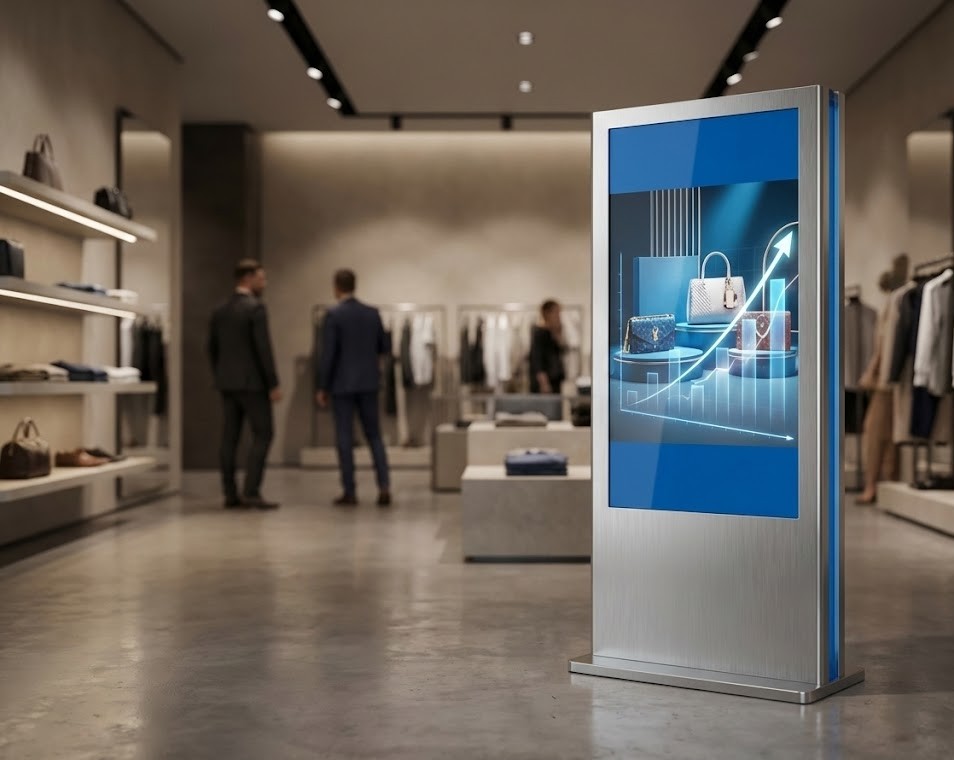
O MUPI Indoor é uma estrutura destinada a ambientes fechados e controlados, como centros comerciais (Shoppings), interfaces de transporte subterrâneo e átrios corporativos. A grande vantagem desta vertente é a proximidade com o ponto de venda (Point of Sale), permitindo impactar o consumidor momentos antes da decisão de compra.
Qual a diferença entre MUPI Digital (DOOH) e MUPI Papel?
A principal diferença reside na dinâmica de conteúdo e na gestão remota: o MUPI Digital permite publicidade programática, vídeo e alteração de campanhas em tempo real, enquanto o MUPI Papel é estático e requer instalação física.
Comparativo Técnico:
MUPI Papel: Exige custos de impressão e logística de afixação. A campanha é imutável durante o período contratado. Ideal para brand awareness contínuo e fixo.
MUPI Digital (DOOH): Elimina custos de impressão. Permite day-parting (anúncios diferentes de manhã e à noite) e integração com feeds de dados (meteorologia, trânsito). Segundo dados recentes de mercado, o DOOH (Digital Out-of-Home) gera níveis de atenção e retenção significativamente superiores aos formatos estáticos devido ao movimento.
O que é um MUPI Interativo e que tecnologia utiliza?
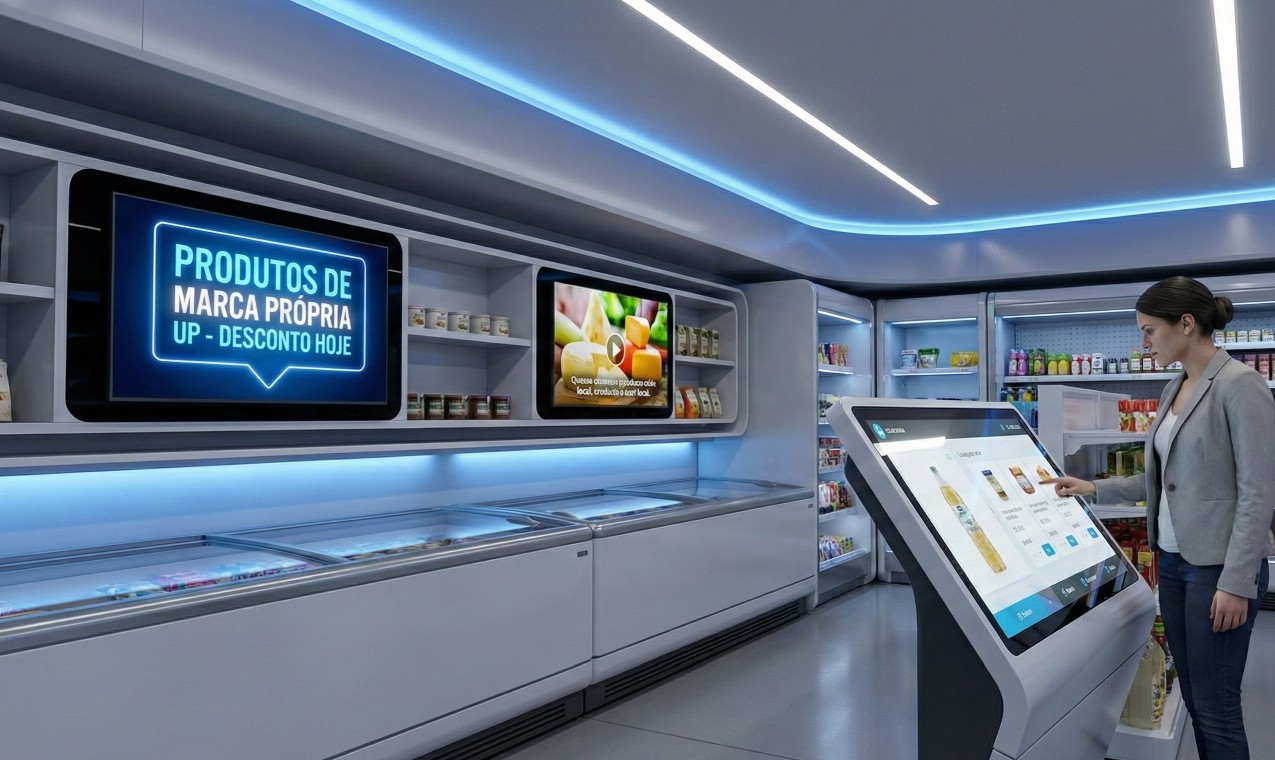
Um MUPI Interativo transforma o suporte publicitário num ponto de contacto bidirecional, utilizando ecrãs táteis (touch screen) ou conectividade móvel para envolver o utilizador.
Para campanhas de 2025, um MUPI Interativo completo pode integrar:
Painel Touch Screen: Para navegação em mapas ou catálogos;
Câmaras e Sensores: Para análise anónima de dados demográficos (idade/género) e métricas de atenção;
NFC e QR Codes: Para transferir a experiência do ecrã público para o telemóvel do utilizador;
Conectividade: Wi-Fi, Bluetooth e 5G para gestão remota e interação em tempo real.
Ideias de Conteúdo para MUPIs Digitais (Por Setor)
Para maximizar o ROI (Return on Investment) nos ecrãs digitais, o conteúdo deve ser contextual e dinâmico. Abaixo, listamos estratégias segmentadas:
Corporativo e Escritórios
Dashboards de KPIs e objetivos em tempo real;
Agendas de salas de reuniões e eventos internos;
Mensagens de boas-vindas a clientes ou parceiros;
Comunicação interna (Recursos Humanos e Endomarketing).
Retalho e Restauração
Menus Digitais (Menu Boards): Atualização instantânea de preços e stock;
Promoções "Flash" baseadas na hora do dia (ex: menu de pequeno-almoço vs. almoço);
Vídeos de "Appetite Appeal" (focados na confecção dos alimentos);
Integração com redes sociais (conteúdo gerado pelo utilizador).
Saúde e Farmácias
Tempos de espera em tempo real;
Promoção de serviços clínicos e vacinação;
Conteúdo educativo sobre saúde e bem-estar;
Diretórios de médicos e especialidades (Wayfinding).
Ensino e Educação
Mapas do Campus e diretórios de salas;
Notificações de emergência e segurança;
Destaque de mérito escolar e eventos académicos;
Horários de transportes e ementas da cantina.
Turismo e Hospitalidade
Check-in digital e informações de Concierge;
Meteorologia local e sugestões de roteiros turísticos;
Promoção de eventos no hotel (Spa, Happy Hour);
Informações de voos e trânsito em tempo real.
Quanto custa um MUPI?
O investimento num MUPI varia significativamente consoante múltiplos fatores:
Tipo de Suporte: MUPI Papel (estático) vs. MUPI Digital (DOOH);
Localização: Indoor (ambiente controlado) vs. Outdoor (resistente a intempéries);
Dimensões: Formatos standard (120x175 cm) vs. configurações personalizadas;
Tecnologia: Ecrãs LCD, LED Wall, funcionalidades interativas (touch, sensores);
Modelo de Aquisição: Compra vs. Aluguer Operacional (DSaaS);
Serviços Incluídos: Instalação, manutenção, gestão de conteúdos (CMS).
Devido à variedade de configurações possíveis, não existe um preço único de mercado. Contacte a nossa equipa para receber uma cotação personalizada que reflita as necessidades específicas do seu projeto, localização e objetivos de comunicação.
Soluções de MUPIs Digitais WOST
Na WOST, simplificamos a transição para a sinalização digital. Oferecemos soluções "chave na mão" que incluem desde o hardware (ecrãs de alto brilho e estruturas robustas) até ao software de gestão de conteúdos.
As nossas soluções abrangem:
Aluguer e venda de Mupis Digitais;
Instalação técnica e manutenção;
Gestão centralizada de redes de ecrãs (CMS).
Pronto para modernizar a sua comunicação visual? Entre em contacto com a nossa equipa especializada para um projeto à medida.