Vitrinismo 2026: Guia de Visual Merchandising e Montras Digitais
15 de janeiro de 2026

Vitrinismo em 2026: Estratégias de Visual Merchandising e Montras Digitais
O vitrinismo evoluiu para uma ferramenta de performance essencial que combina psicologia do consumidor, design estratégico e tecnologia para aumentar o tráfego qualificado e a conversão em loja. Num cenário de retalho "figital", a integração entre montras físicas e digitais é o diferencial que transforma curiosos em clientes fiéis.
O que é o Vitrinismo e qual a sua importância atual?
O vitrinismo é a estratégia de marketing visual que planeia e decora montras para maximizar a visibilidade, comunicar a identidade da marca e aumentar o valor percebido dos produtos expostos.
Em 2026, esta disciplina transcende a simples exposição de artigos. Envolve uma narrativa visual complexa (storytelling), iluminação técnica, psicologia das cores e coerência omnicanal. O vitrinismo e o visual merchandising funcionam em simbiose: a montra atua como o convite inicial de alto impacto, enquanto o interior da loja valida essa promessa visual, criando uma jornada de compra fluida. Profissionais da área utilizam agora dados de comportamento para criar composições que não só são esteticamente agradáveis, mas que também convertem.
Uma vez compreendido o conceito, é fundamental analisar os números: o investimento compensa?
Porque deve investir na decoração de montras e qual o ROI esperado?
Investir na decoração profissional de montras é uma das formas mais eficazes de aumentar a visibilidade de uma loja física e de incentivar a entrada de novos clientes, contribuindo para melhorar o retorno do investimento em ações de marketing no ponto de venda.
Dados de mercado de 2025 indicam que montras de alto impacto são decisivas no funil de vendas físico. De acordo com autores de merchandising visual como Maier e Demetresco (2004), a vitrine responde diretamente por cerca de 70% das vendas, atuando como principal atrativo para atrair clientes e influenciar a entrada na loja. Além do tráfego, existe o fator de valorização: produtos expostos com iluminação estratégica e cenografia adequada têm uma perceção de valor até 20% superior, facilitando a aceitação do preço e aumentando o ticket médio.
Ação Recomendada: Reveja a estratégia da sua montra a cada mudança de coleção. Utilize um calendário visual alinhado com o plano de marketing para garantir frescura e relevância.
Para garantir este retorno, é necessário dominar as técnicas de composição.
Quais são as melhores práticas de Vitrinismo e Visual Merchandising?
As melhores práticas de vitrinismo baseiam-se na definição de um ponto focal claro, na hierarquia visual ao nível dos olhos e na utilização intencional da iluminação para guiar a atenção do consumidor.
Não é necessário um orçamento ilimitado, mas sim método e precisão técnica:
Produto Herói e Mensagem Única: Evite o ruído visual. Cada montra deve ter uma mensagem singular (lançamento, saldos ou branding) e um "produto herói" em destaque.
Hierarquia Visual: Posicione os produtos de maior margem ou interesse na "zona quente" (ao nível dos olhos, aproximadamente a 1,60m do solo).
Psicologia da Cor: Utilize combinações cromáticas complementares ou monocromáticas para dirigir o olhar e evocar emoções específicas que aceleram a decisão de compra.
Iluminação de Acento: A luz não serve apenas para ver, mas para vender. Pontos de luz focados criam dramatismo e aumentam o tempo de retenção visual.
Rotação Estratégica: Acompanhe a sazonalidade (Natal, Black Friday, Verão) para gerar o gatilho mental da urgência e novidade.
Ação Recomendada: Planeie as suas próximas 3 campanhas focando-se na regra de "menos é mais". Agende uma visita técnica para harmonizar o vitrinismo com o pricing em loja.
Mas como é que a tecnologia está a redefinir estas práticas tradicionais?
Como funcionam as Montras Digitais e a integração Omnicanal?
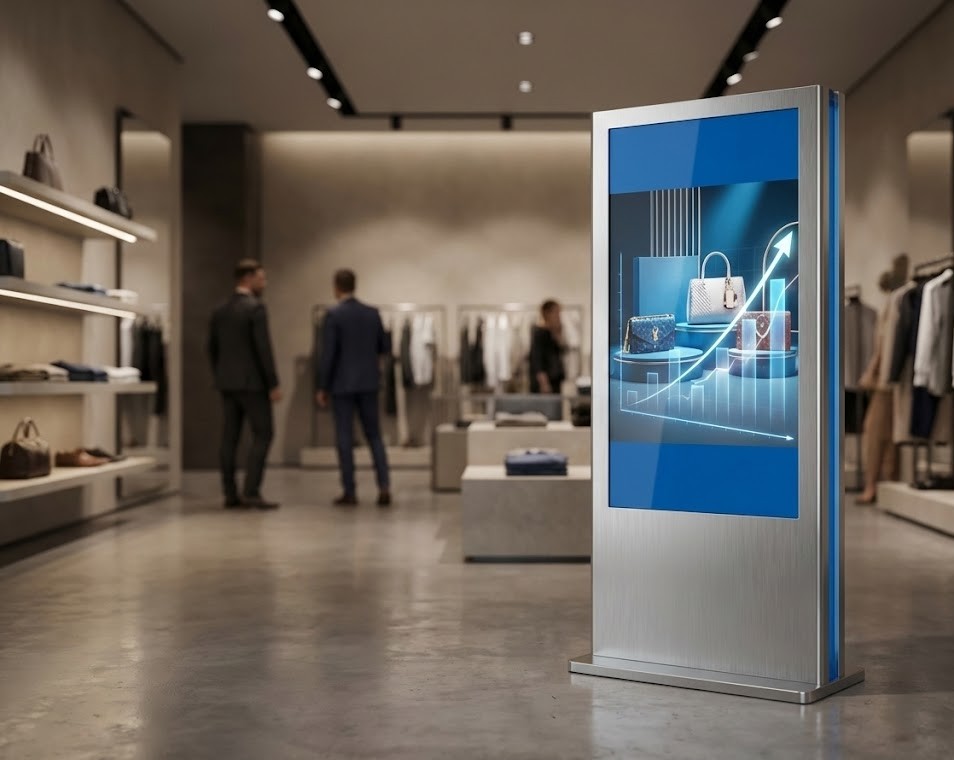
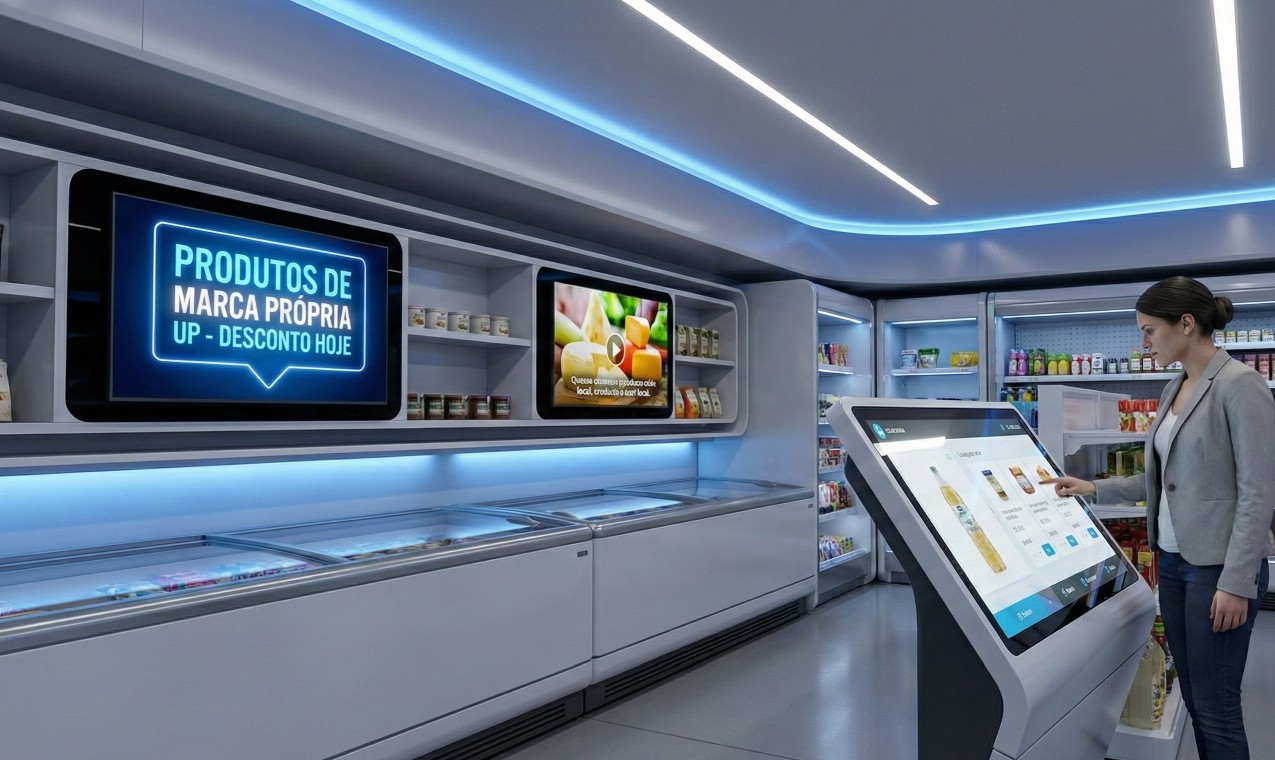
As montras digitais representam a evolução do vitrinismo, permitindo a atualização remota de conteúdos dinâmicos e a integração de dados em tempo real, captando até 400% mais visualizações que a sinalética estática.
A barreira entre o online e o offline desapareceu. A sinalética digital (digital signage) permite adaptar a comunicação baseada na hora do dia, nos níveis de stock ou até no perfil demográfico dos transeuntes (através de sensores de IA, respeitando a privacidade). A integração omnicanal ocorre quando a montra física convida à interação digital — por exemplo, através de QR Codes para realidade aumentada ou compras online de produtos sem stock físico. Isto garante consistência de marca em todos os touchpoints.
Ação Recomendada: Se ainda opera de forma 100% analógica, inicie um projeto piloto com um ecrã de alto brilho (adequado para montras) para testar campanhas de vídeo e medir o impacto na retenção.
O impacto visual atrai, mas o que mantém o cliente na loja?
Qual o papel do Storytelling na experiência do cliente em loja?
O vitrinismo eficaz funciona como o primeiro capítulo de uma narrativa visual que deve continuar consistentemente no interior da loja para maximizar a satisfação e a fidelização.
A montra não pode ser uma ilha isolada. Se o exterior promete luxo e exclusividade, o interior não pode apresentar desorganização.
Coerência Narrativa: Do passeio até à caixa de pagamento, as cores, o tom de voz e os materiais devem ser consistentes.
Percursos sem Fricção: O "produto herói" da montra deve estar visível e acessível logo na zona de descompressão (entrada da loja).
Marketing Sensorial: Em 2026, a experiência de compra envolve todos os sentidos. A iluminação, a playlist e o aroma da loja devem reforçar a história contada na montra.
Ação Recomendada: Faça o percurso do cliente ("customer walk") na sua própria loja. Identifique onde a narrativa visual quebra e corrija esses pontos de fricção.
Como implementar uma estratégia de Vitrinismo profissional?
Começar ou profissionalizar o vitrinismo exige encarar a montra como um canal de media pago e não como um custo decorativo, exigindo planeamento trimestral e análise de métricas.
Para empresários que desejam resultados previsíveis:
Diagnóstico Imediato: Avalie a clareza da mensagem atual. Alguém que passe de carro a 20km/h consegue perceber o que vende em 3 segundos?
Calendário Comercial: Defina temas e datas de renovação com antecedência. A improvisação é inimiga da conversão.
Especialização: Considere a contratação de visual merchandisers ou formação de equipa. O design amador pode desvalorizar um produto premium.
Hibridismo: Combine elementos físicos (manequins, suportes) com digitais para agilidade comercial.
Conclusão
O vitrinismo em 2026 é uma disciplina de precisão. Ao aliar a decoração de montras estratégica ao visual merchandising e às novas tecnologias de display, os retalhistas transformam o vidro da loja num ativo de conversão poderoso. O segredo reside na consistência, na narrativa e na capacidade de adaptação rápida às tendências de mercado.