Sinalização Digital para Escritórios e Coworkings: Guia 2026
18 de janeiro de 2026
Sinalização Digital para Escritórios e Coworkings: O Guia Completo 2026
A sinalização digital para escritórios transforma espaços de trabalho em ecossistemas inteligentes, automatizando a gestão de salas e elevando a experiência do visitante através de comunicação visual dinâmica. Num mercado onde Lisboa e Porto registam um crescimento anual superior a 20% em espaços flexíveis, a adoção de tecnologias como room booking displays deixou de ser um luxo para se tornar um requisito operacional competitivo.
Quais são os benefícios da Digital Signage em escritórios modernos?
A sinalização digital aumenta a eficiência operacional ao descentralizar a informação, reduzindo drasticamente o volume de e-mails internos e interrupções na receção. Ao substituir avisos em papel e comunicações estáticas por painéis dinâmicos, as empresas garantem que a informação crítica — desde KPIs de vendas a protocolos de segurança — chega a todos os colaboradores em tempo real.
Para os gestores de espaços, a mais-valia reflete-se na autonomia: os visitantes encontram o seu caminho (wayfinding) sem assistência humana e as equipas reservam espaços sem conflitos de agenda. Soluções robustas como as da WOST são fundamentais para criar esta imagem profissional e tecnológica logo à entrada.
Que soluções de ecrãs digitais são essenciais para coworkings?
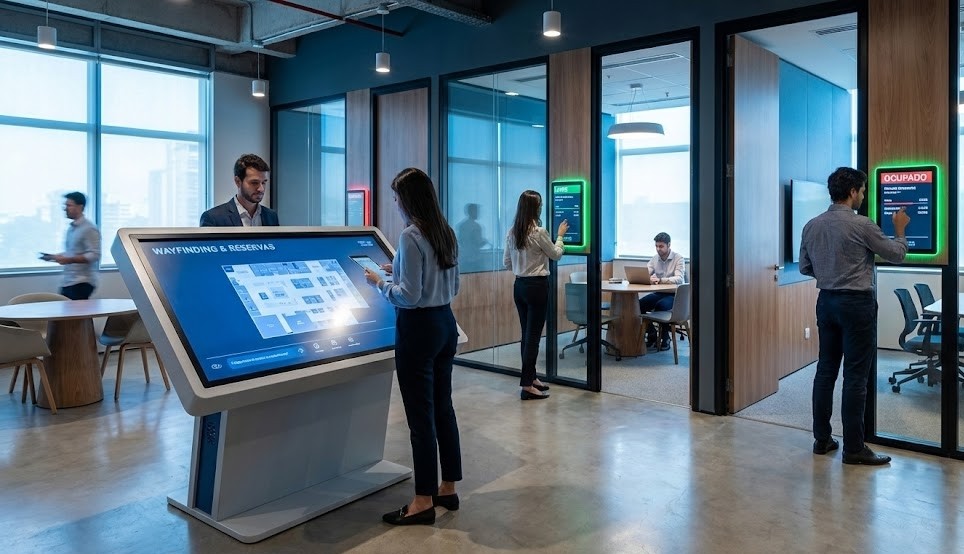
As ferramentas indispensáveis para um coworking funcional são os painéis de reserva de salas (room booking displays) e os quiosques de wayfinding. Diferente da TV corporativa tradicional, que apenas transmite broadcasts, estas soluções são interativas e integradas com o calendário da empresa (Google Workspace, Office 365).
Room Booking Displays: Colocados à porta das salas, indicam disponibilidade via luzes LED (verde/vermelho) e permitem reservas ad-hoc no próprio ecrã.
Wayfinding Digital: Essencial em espaços grandes como a Second Home ou Spaces, guiando membros e visitantes aos seus destinos.
Gestão Centralizada: O segredo está no software na nuvem (CMS), que permite atualizar uma rede multi-ecrã em menos de 10 minutos.
Em Portugal, integradores como a WOST fornecem estas soluções chave-na-mão, garantindo compatibilidade entre hardware e software.
Como implementar sinalização digital e qual o ROI esperado?
A implementação eficaz requer apenas três pilares: ecrãs profissionais (SoC), um reprodutor multimédia (se não integrado) e um CMS escalável, gerando um retorno sobre o investimento (ROI) rápido através da redução de horas administrativas. Estudos de mercado indicam que a automatização da gestão de salas pode recuperar o investimento inicial em menos de 12 meses, apenas pela eliminação de "salas fantasma" (reservadas mas não usadas) e pelo aumento da faturação em aluguer de espaços extra.
Para começar, não é necessário equipar todo o edifício de uma vez. A escalabilidade permite iniciar com a receção e salas principais, expandindo conforme o crescimento do negócio.
Quais as tendências de Digital Signage para 2026?
As grandes tendências para 2026 são a integração de IA para conteúdos reativos (triggers) e a sustentabilidade energética dos equipamentos. Ao contrário das playlists estáticas do passado, os novos sistemas reagem a dados em tempo real: se começar a chover, o ecrã da saída sugere serviços de táxi; se uma sala estiver sobrelotada, emite alertas de segurança.
Conteúdo Reativo: A IA ajusta a mensagem baseada na audiência presente (detetada via sensores anónimos) ou dados externos.
Eficiência Energética: Com os custos de energia a pesar nos coworkings, o uso de ecrãs e-paper ou LED de baixo consumo com agendamento automático de standby é crucial.
Marcas que adotam estas inovações destacam-se num mercado europeu de coworking avaliado em mais de 7 mil milhões de euros.
Como começar a modernizar o seu escritório hoje?
O primeiro passo é auditar os seus "pontos de dor" na comunicação interna e agendar uma demonstração técnica com fornecedores locais. Avalie se necessita primariamente de gestão de tráfego (receção) ou gestão de espaço (salas de reunião).
Não adie a modernização da sua infraestrutura. Entre em contacto com os nossos especialistas para uma consultoria personalizada e garanta que o seu espaço de trabalho está preparado para o futuro do trabalho híbrido.