Púlpito Digital vs Acrílico: Guia de Escolha e Preços 2026
Púlpito Digital vs. Acrílico: Qual a Melhor Escolha para Eventos em 2026?
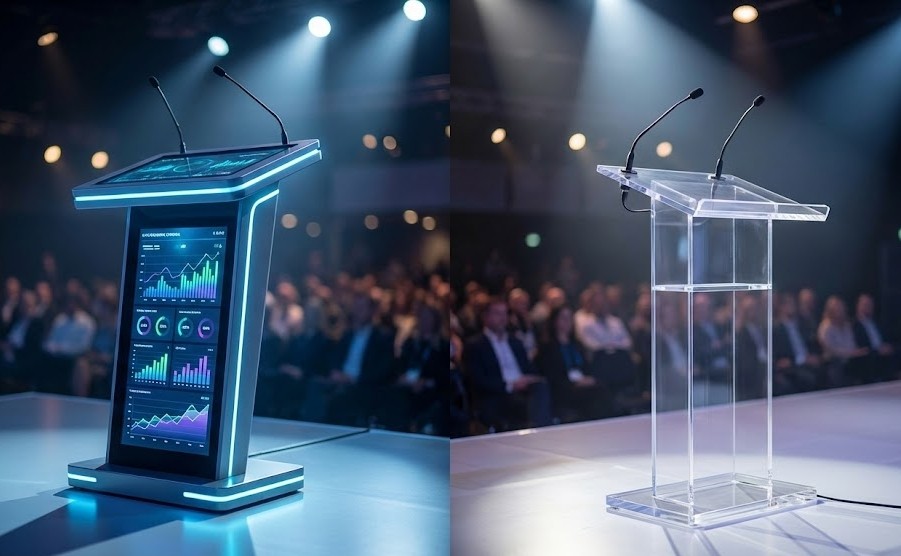
A principal diferença entre um púlpito digital e um púlpito em acrílico reside na funcionalidade: enquanto o modelo em acrílico serve exclusivamente como suporte físico estético, o púlpito digital atua como um canal de comunicação ativo, capaz de transmitir dados, publicidade e branding dinâmico em tempo real. A escolha correta depende do orçamento, da infraestrutura técnica do local e dos objetivos de ROI (Retorno sobre Investimento) do evento.
O que define um púlpito digital no contexto atual?
Um púlpito digital é um hardware de apresentação integrado que combina uma estrutura física com ecrãs de alta definição (geralmente 4K em 2026) e um sistema de gestão de conteúdos (CMS). Ao contrário dos modelos antigos, as soluções atuais funcionam como "hubs" IoT, permitindo a gestão remota de conteúdos multimédia — vídeos, apresentações interativas e feeds de redes sociais — enquanto o orador discursa.
De acordo com as tendências de mercado de Digital Signage para 2026, a integração de ecrãs em mobiliário de palco cresceu devido à necessidade de monetização de eventos (exibição de patrocinadores dinâmicos).
Porque deve investir num púlpito digital?
A principal vantagem é a capacidade de retenção de atenção e a monetização do palco.
- Monetização Dinâmica: Permite alternar logótipos de patrocinadores a cada 30 segundos, aumentando o inventário publicitário do evento sem necessidade de impressão física.
- Flexibilidade de Conteúdos: O orador pode apresentar gráficos de vendas enquanto o ecrã frontal exibe o slogan da campanha, tudo gerido via cloud.
- Perceção Tecnológica: O uso de displays digitais em palco está correlacionado com uma perceção de autoridade e inovação por parte da audiência corporativa.
Quando é que o púlpito digital é a única opção lógica?
O digital é imperativo em eventos onde o "Palco" é um ativo financeiro ou de brand awareness.
- Grandes Convenções e Congressos: Onde múltiplos oradores e patrocinadores exigem trocas rápidas de identidade visual.
- Lançamentos de Produto: Para garantir coerência visual entre o que é dito e a imagem da marca.
- Eventos Híbridos: A luminosidade e o contraste dos ecrãs digitais funcionam melhor na captação de câmaras para streaming do que materiais estáticos.
A tecnologia é fundamental, mas e se a prioridade for a mobilidade e o custo? É aqui que entra o acrílico.
O que torna o púlpito acrílico relevante em 2026?
O púlpito acrílico é uma estrutura monobloco transparente, valorizada pela sua neutralidade estética, leveza e alta resistência ao impacto (superior ao vidro). Apesar da evolução digital, o acrílico mantém uma quota de mercado sólida devido à sua capacidade de "desaparecer" no palco, focando toda a atenção no orador, e ao seu custo de aquisição significativamente mais baixo.
A maquinação e corte a laser permitem hoje designs curvos e ergonómicos que modernizam a peça sem a necessidade de componentes eletrónicos.
Quais as vantagens competitivas do acrílico?
A relação custo-benefício e a facilidade operacional são os pontos fortes.
- Neutralidade Cénica: A transparência do material não interfere com a iluminação do palco nem com o fundo (backdrop), adaptando-se a qualquer decoração.
- Logística Simplificada: Pesando entre 15kg a 25kg, é facilmente transportado por uma pessoa, ao contrário das estruturas digitais que exigem equipas de montagem e cablagem.
- Durabilidade Passiva: Não sofre de obsolescência tecnológica, falhas de software ou avarias de ecrã.
Quando deve optar pelo púlpito acrílico?
- Espaços de Culto e Pequenos Auditórios: Onde o orçamento é limitado e a troca de oradores é pouco frequente.
- Eventos Itinerantes: Onde a rapidez de montagem/desmontagem e a resistência ao transporte são críticas.
- Cenários Minimalistas: Onde a tecnologia não deve distrair da mensagem verbal (ex: palestras académicas ou solenes).
Comparativo Direto: Digital vs. Acrílico
Para decisores que precisam de avaliar o ROI imediato, esta tabela cruza especificações técnicas com custos estimados.
| Critério de Decisão | Púlpito Digital (Smart Podium) | Púlpito Acrílico (Standard) |
|---|---|---|
| Função Primária | Comunicação Visual e Interatividade | Suporte Ergonómico ao Orador |
| Experiência do Público | Alta: Vídeo, Motion Graphics, Live Data | Neutra: Foco total no orador |
| Atualização de Marca | Imediata (via Software/Cloud) | Lenta (Requer vinil ou gravação física) |
| Complexidade Técnica | Alta (Requer energia e gestão de dados) | Nula (Plug-and-play físico) |
| Investimento Estimado | Sob orçamento (pedir orçamento) | Baixo |
| Vida Útil | 5-7 anos (dependente da tecnologia) | 10-15 anos (dependente do cuidado físico) |
| Sustentabilidade | Consumo energético contínuo | Passivo (baixo impacto após produção) |
Guia de Decisão Estratégica para Gestores
Como escolher a solução certa para a sua organização? Analise estas três variáveis críticas.
1. Qual é o papel do palco no seu modelo de negócio?
Se o palco serve para vender patrocínios ou lançar produtos tecnológicos, o púlpito digital é um investimento com retorno financeiro direto (venda de espaço publicitário no ecrã frontal). Se o palco é apenas funcional, o acrílico é a escolha racional.
2. Qual é a infraestrutura de suporte (AV) disponível?
Um púlpito digital requer pontos de rede e eletricidade no chão do palco, além de um técnico para operar o conteúdo. Se a sua equipa é reduzida ou o local é antigo, um púlpito acrílico elimina riscos operacionais.
3. Abordagem Híbrida: O melhor dos dois mundos?
Muitas empresas de eventos em 2026 adotaram um modelo misto: mantêm um stock de púlpitos acrílicos para breakout rooms (salas menores) e investem num púlpito digital flagship para o palco principal (Main Stage). Isto otimiza o orçamento sem comprometer o impacto dos momentos-chave.
Próximos Passos Recomendados
- Auditoria de Necessidades: Liste os próximos 5 eventos da sua empresa. Quantos exigem mudanças de branding em tempo real?
- Pedido de Cotação Técnica: Ao contactar fornecedores como a WOST, especifique se necessita de integração com sistemas de som ou HDMI existentes.
- Teste de Usabilidade: Verifique a altura e ergonomia. Um púlpito digital mal desenhado pode tapar o orador nas transmissões de vídeo.
Outras Publicações