Montras Digitais no Turismo: O Guia de Digital Signage 2026
2 de janeiro de 2026
Montras Digitais no Turismo: Como Revolucionar a Promoção de Atrações em 2026?
As montras digitais (digital signage) são a ferramenta essencial para diferenciar destinos turísticos e atrações locais, utilizando ecrãs de alto brilho para comunicar com viajantes modernos. Em 2026, esta tecnologia evoluiu para ecossistemas interativos que unem sustentabilidade e dados em tempo real, sendo vital para empresários que procuram destacar-se num mercado saturado.
O que são montras digitais e qual o seu impacto no turismo?
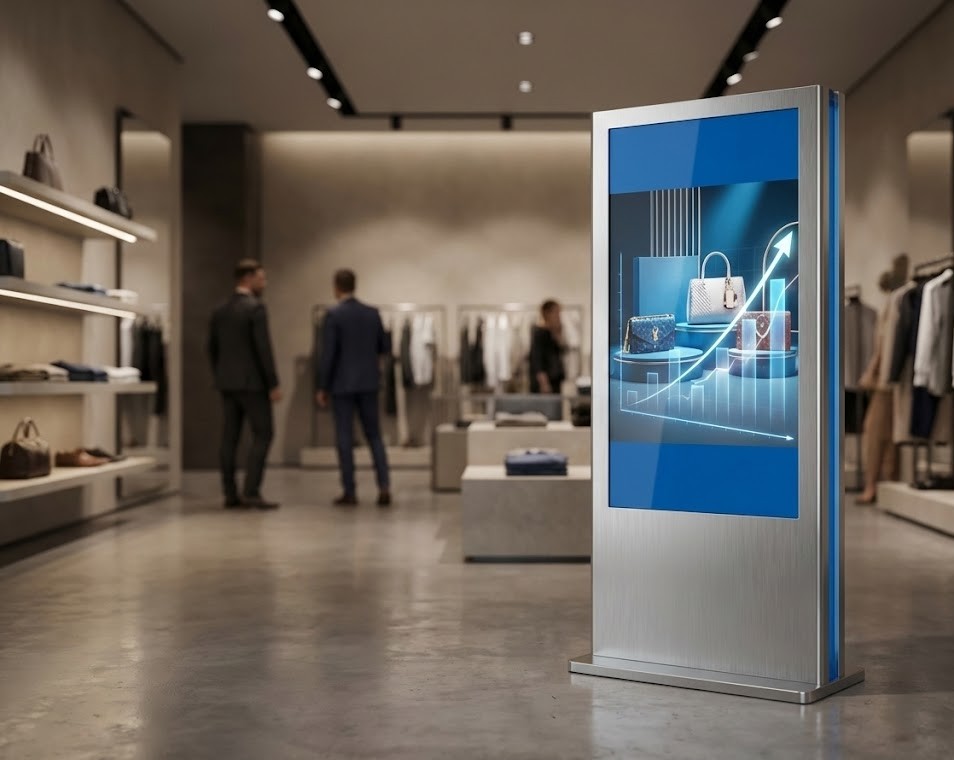
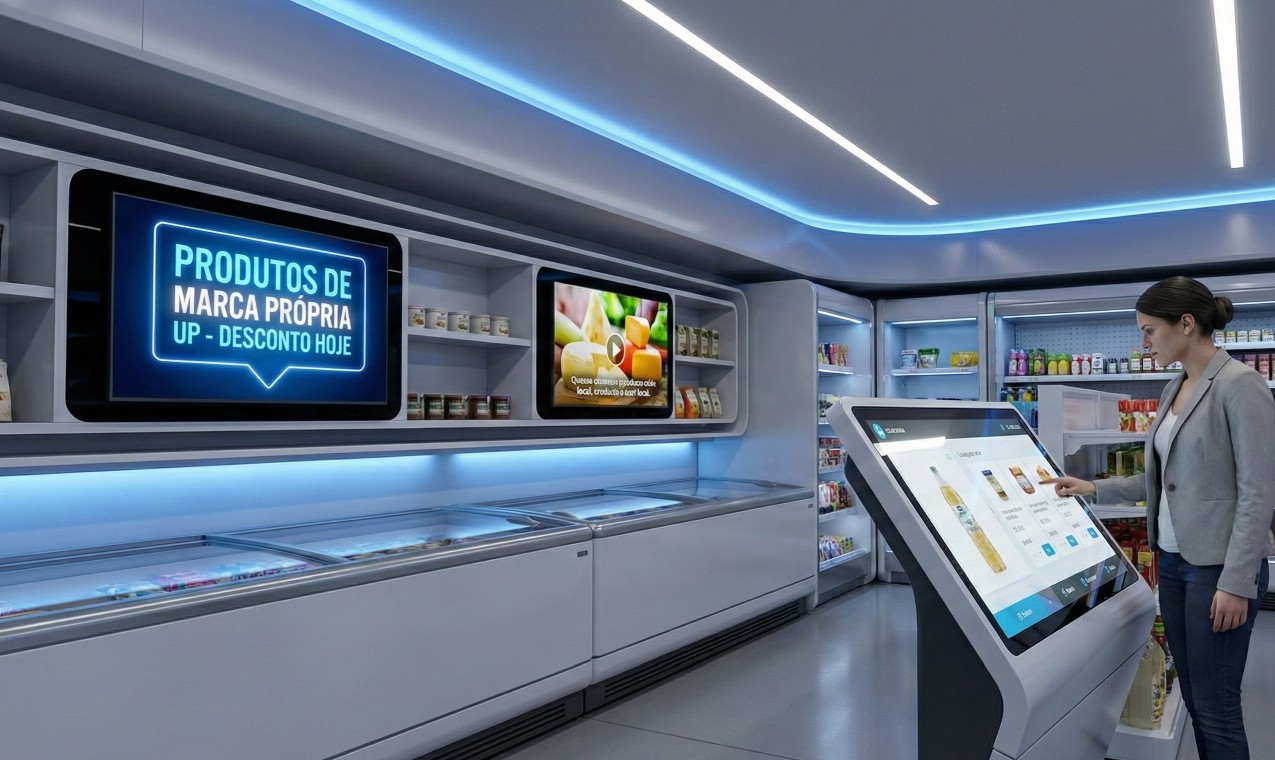
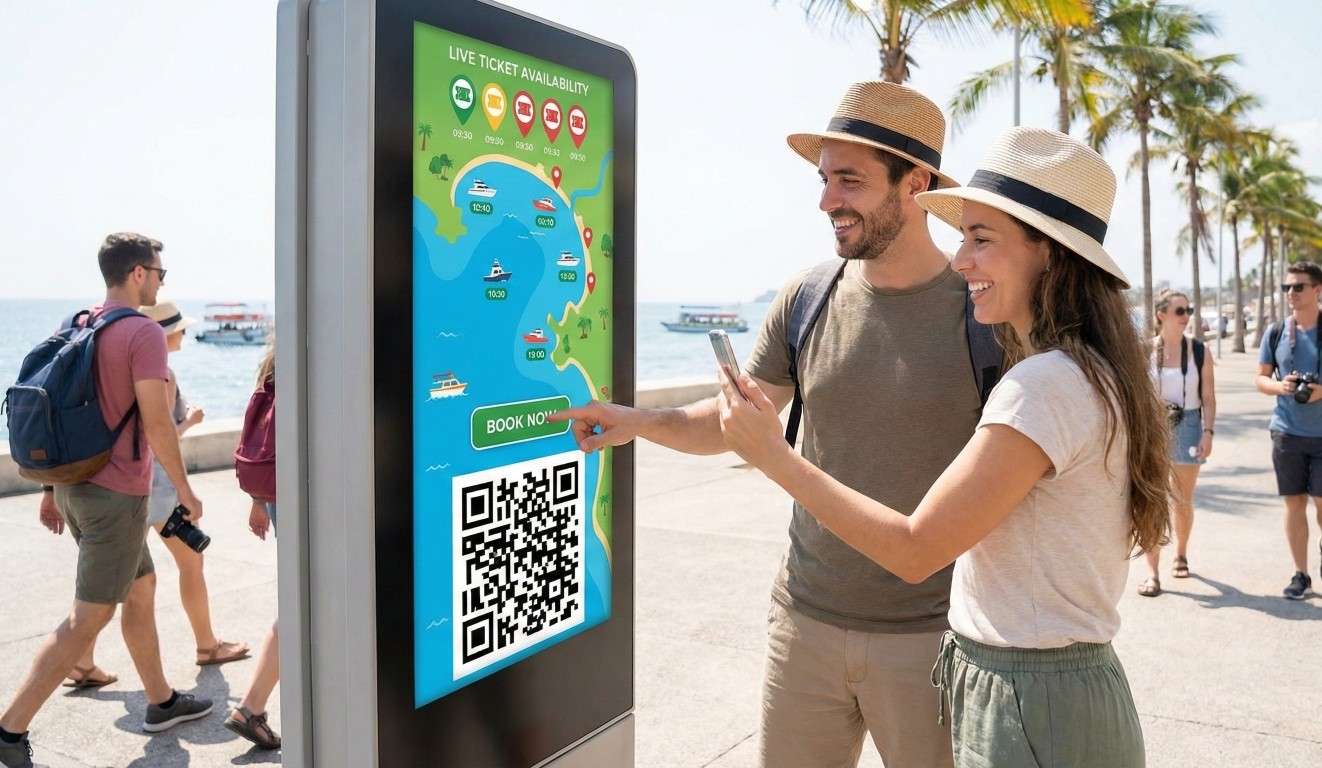
As montras digitais são soluções de comunicação visual (LED/LCD) que aumentam a captação de atenção em 400% e a retenção de mensagem em 83% comparativamente à sinalética estática. Ao contrário dos cartazes tradicionais, estes painéis permitem a gestão remota de conteúdos dinâmicos—como mapas interativos, meteorologia local e disponibilidade de bilhetes em tempo real. Para agências de viagens e autarquias, isto traduz-se numa redução drástica de custos de impressão e numa imagem de modernidade alinhada com as expectativas do turista digital.
Mas como é que esta tecnologia se traduz em resultados financeiros concretos?
Como é que o Digital Signage influencia a decisão dos visitantes?
Dados de mercado de 2026 indicam que 74% dos turistas alteram a sua decisão de visita ou compra após interagirem com conteúdos de vídeo em locais públicos. A promoção turística digital permite destacar eventos, gastronomia e património com um apelo visual imediato. Cidades inteligentes (como o exemplo de Bragança e outros hubs urbanos) utilizam mupis digitais para prolongar a estadia média dos visitantes, sugerindo roteiros complementares. Além disso, a integração de IA permite agora adaptar o conteúdo ao perfil de quem passa, maximizando a relevância e o ROI (Return on Investment) das campanhas locais.
Sabendo o impacto, qual é a melhor forma de iniciar a implementação?
Que estratégias garantem o sucesso na implementação de ecrãs turísticos?
A implementação eficaz exige a colocação de ecrãs em zonas de alto tráfego (praças, montras de agências) integrados com tecnologia mobile (QR Codes e NFC) para reservas imediatas. Para um SEO local robusto, as descrições dos seus serviços devem incluir variações semânticas como "ecrãs interativos para turismo" ou "vitrines LED para destinos". Em 2026, a tendência é o "Green Signage": opte por equipamentos de baixo consumo energético. Empreendedores podem reutilizar TVs existentes com players externos e software de gestão na nuvem (Cloud), permitindo lançar campanhas sazonais em minutos sem custos técnicos adicionais.
Que tipo de conteúdo visual gera mais conversões?
Vídeos curtos de experiências (15-30 segundos), infográficos de "Dwell Time" e testemunhos sociais em tempo real são os formatos com maior taxa de conversão. Evite imagens estáticas. Sugira movimento: uma montra LED num centro histórico deve mostrar a vida a acontecer, não apenas o monumento vazio. Estudos indicam que o storytelling visual aumenta o envolvimento do cliente. Se procura uma vantagem competitiva, experimente soluções que permitam agendar este conteúdo automaticamente.
Conclusão: O Futuro da Promoção Turística é Agora
O turismo digital signage não é apenas uma tendência; é um requisito de infraestrutura para 2026, com o mercado global a caminhar para os 40 mil milhões de dólares. Unir a narrativa visual à tecnologia de ponta é a única forma de garantir relevância.
Está pronto para modernizar a sua atração turística? Contacte a Wost.pt para uma demonstração personalizada e descubra como as nossas soluções de montras digitais podem aumentar as suas visitas hoje mesmo.