Montras Digitais Imobiliárias: Aumente Vendas e Leads em 2026
27 de dezembro de 2025
Montra Digital Imobiliária: Como Modernizar a Sua Agência com Tecnologia de 2026?
No mercado imobiliário hipercompetitivo de 2026, captar a atenção é o ativo mais escasso. A montra digital deixou de ser um acessório estético para se tornar uma ferramenta de conversão de alto desempenho, obrigatória para agências imobiliárias que pretendem captar a atenção da geração de compradores. mobile-first.
O que é uma Montra Digital Imobiliária estratégica?
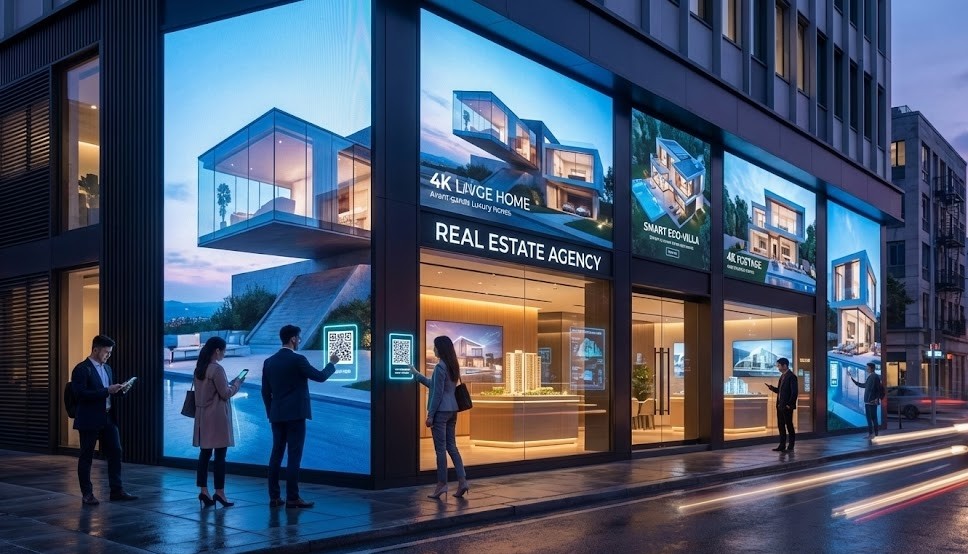
É um ecossistema de comunicação visual gerido remotamente, composto por ecrãs de alto brilho que exibem a sua carteira de imóveis em tempo real. Ao contrário dos expositores de papel estáticos, que exigem manutenção manual e degradam-se com a exposição solar, a montra digital permite a rotação dinâmica de centenas de anúncios, vídeos 4K e dados de mercado num único espaço físico.
Uma vez instalada a tecnologia, qual é o retorno tangível para a agência?
Quais são as vantagens comprovadas da sinalética digital no imobiliário?
Dados de mercado de 2026 indicam que anúncios com vídeo geram até 403% mais inquéritos do que imagens estáticas, maximizando a captação de leads potenciais. A principal vantagem reside na capacidade de interromper o padrão de caminhada do transeunte através de movimento e luminosidade, convertendo a vitrine num vendedor ativo 24 horas por dia.
A tecnologia atual da agência imobiliária é fundamental para descobrir novas oportunidades de mercado. Wost garante ainda:
Visibilidade Solar Extrema: Ecrãs profissionais com 3.500 a 4.000 nits, garantindo legibilidade perfeita mesmo sob a luz direta do sol português, são essenciais para divulgar apartamentos.
Sincronização em Tempo Real: uma ferramenta eficaz para agências imobiliárias. Se o preço de um imóvel é alterado no CRM, a atualização na montra é imediata, garantindo total conformidade com as novas regras de transparência de preços.
Mas esta automação exige conhecimentos técnicos avançados?
Como integrar a Montra Digital com o CRM da agência?
A integração é totalmente automatizada via API ou feeds XML, conectando o seu CRM imobiliário diretamente à plataforma de gestão da Wost. Isto elimina a duplicação de tarefas: o sistema "lê" a sua base de dados existente e gera os diapositivos visuais automaticamente, sem intervenção humana.
A nossa tecnologia é compatível com os principais CRMs do mercado e portais que ajudam a divulgar o negócio imobiliário. Idealista, permitindo criar playlists inteligentes que exibem:
As angariações mais recentes (Top New).
Baixas de preço (Price Drops) para criar sentido de urgência.
Imóveis "Vendidos" para prova social de eficácia em um negócio imobiliário.
Esta automação liberta os consultores para se focarem no fecho de negócios, removendo a carga administrativa da gestão de vitrine.
Com a parte técnica resolvida, que conteúdo garante a paragem do cliente?
Que tipo de conteúdo visual converte transeuntes em leads?
Vídeos verticais curtos (15 a 30 segundos) e fotografia 4K são o padrão obrigatório para retenção de atenção em 2026. O consumidor moderno, habituado ao consumo rápido de redes sociais, decide em menos de 3 segundos se o imóvel lhe interessa.
Para maximizar a conversão na rua, utilize estratégias que captem a atenção dos passantes.
Jornada Phygital (QR Codes): uma forma eficaz de captar a atenção dos potenciais compradores. Utilize QR Codes dinâmicos que permitem ao cliente "levar o imóvel" no telemóvel e agendar visita imediatamente.
Hook Visual: uma estratégia eficaz para captar a atenção dos potenciais compradores. Destaque características de alto valor (terraços, vistas, renovações) nos primeiros segundos do vídeo.
Micro-Copywriting: Substitua descrições longas por folhas de montra apelativas. bullet points de impacto, como "T3 Chiado | Vista Rio | Garagem", que são legíveis em movimento.
E existe prova de que este investimento traz retorno financeiro?
Existem dados que comprovem o aumento de vendas com montras digitais?
Sim, estudos de retalho aplicados ao imobiliário demonstram que a sinalética digital pode aumentar o volume de tráfego qualificado em até 30%. Agências em Lisboa que implementaram soluções da Wost reportaram um aumento correlacionado nas visitas ao site da agência através da leitura de QR Codes na montra.
A capacidade de exibir testemunhos de clientes em vídeo e visitas virtuais na montra cria uma autoridade imediata (Social Proof), algo impossível de replicar com os tradicionais expositores de acrílico.
Quais são as tendências de Sinalética Imobiliária para 2026?
As tendências dominantes são a "Physical AI" (Inteligência Artificial Física) e a Eco-Eficiência, impulsionadas pelas novas normas de sustentabilidade que tornam o negócio imobiliário mais apelativo.
Sensores de Audiência (RGPD Compliant): Câmaras com IA que anonimizam dados mas permitem saber quantas pessoas pararam para ver a montra e qual o imóvel que reteve mais atenção.
Interatividade "Through-Glass": Películas de toque que permitem ao utilizador navegar no site da agência tocando no vidro da montra, mesmo com a loja fechada.
Sustentabilidade Energética: Os novos ecrãs LED da Wost consomem até 40% menos energia do que os modelos de 2024, alinhando a sua agência com as metas de redução de carbono.
Conclusão: O marketing digital começa na montra física
A montra digital não é uma ilha isolada; é o ponto de contacto físico da sua estratégia digital. Ao alinhar os conteúdos dos ecrãs com as suas campanhas online, a sua agência cria uma experiência omnicanal coesa que transmite modernidade, confiança e liderança de mercado.