Displays Digitais para Empresas: Guia de Vantagens e ROI (2026)
5 de janeiro de 2026
Os displays digitais são a infraestrutura de comunicação visual que permite às empresas transmitir mensagens dinâmicas, geridas remotamente e em tempo real, substituindo a sinalética estática tradicional. Otimizados para a economia da atenção de 2026, estes dispositivos não só informam como transformam espaços comerciais em pontos de recolha de dados e interação phygital.
Quais são as principais vantagens dos Displays Digitais para o meu negócio?
A principal vantagem é o retorno financeiro mensurável: estudos de 2025 indicam que a sinalética digital aumenta o valor médio das transações em 31,8% e a taxa de retenção de marca em 47,7%. Ao contrário dos cartazes impressos, que geram custos recorrentes de logística e têm impacto nulo na interatividade, os ecrãs digitais permitem campanhas ágeis. Além disso, a capacidade de entretenimento destes dispositivos reduz a sensação de tempo de espera dos clientes em cerca de 35%, mitigando a frustração em filas de checkout. Para hotéis e retalho, a gestão centralizada via cloud permite adaptar promoções instantaneamente a fatores externos, como o clima ou o stock.
Mas para atingir estes números, que tipo de hardware deve escolher?
Que tipos de ecrãs e tecnologias existem para empresas?
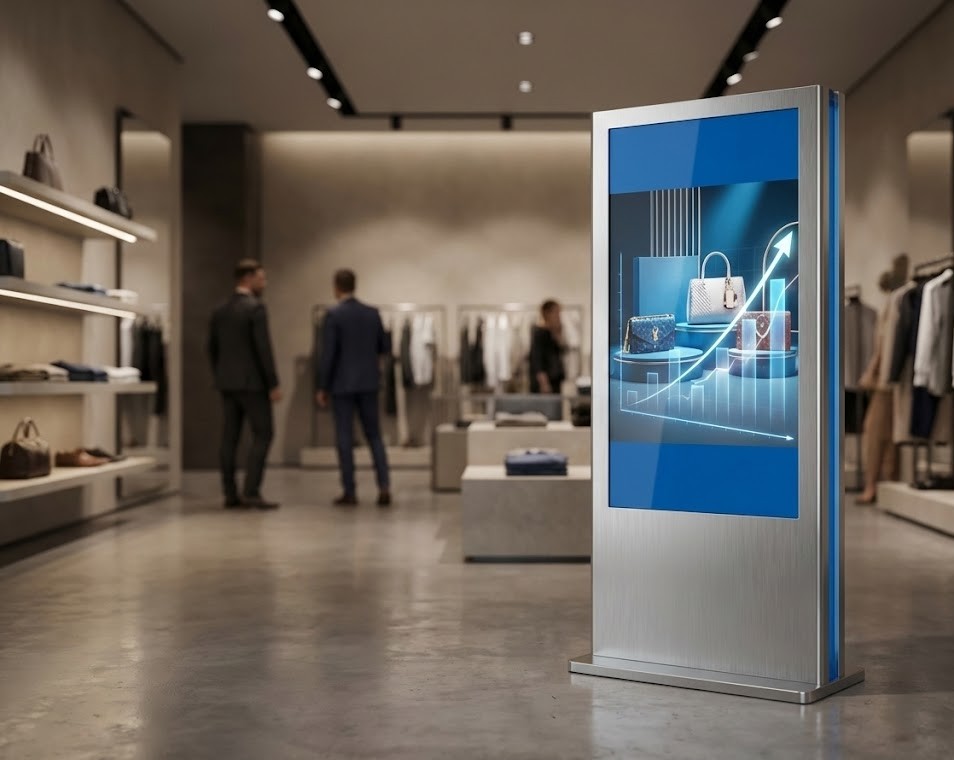
As soluções dividem-se em três categorias principais: Videowalls para impacto imersivo, mupis interativos (totens) para autosserviço e ecrãs de alta transparência para montras.
Videowalls e MicroLED: Ideais para grandes superfícies, sincronizam múltiplos monitores para criar uma imagem única de alta resolução, essencial para captar atenção em eventos ou flagship stores.
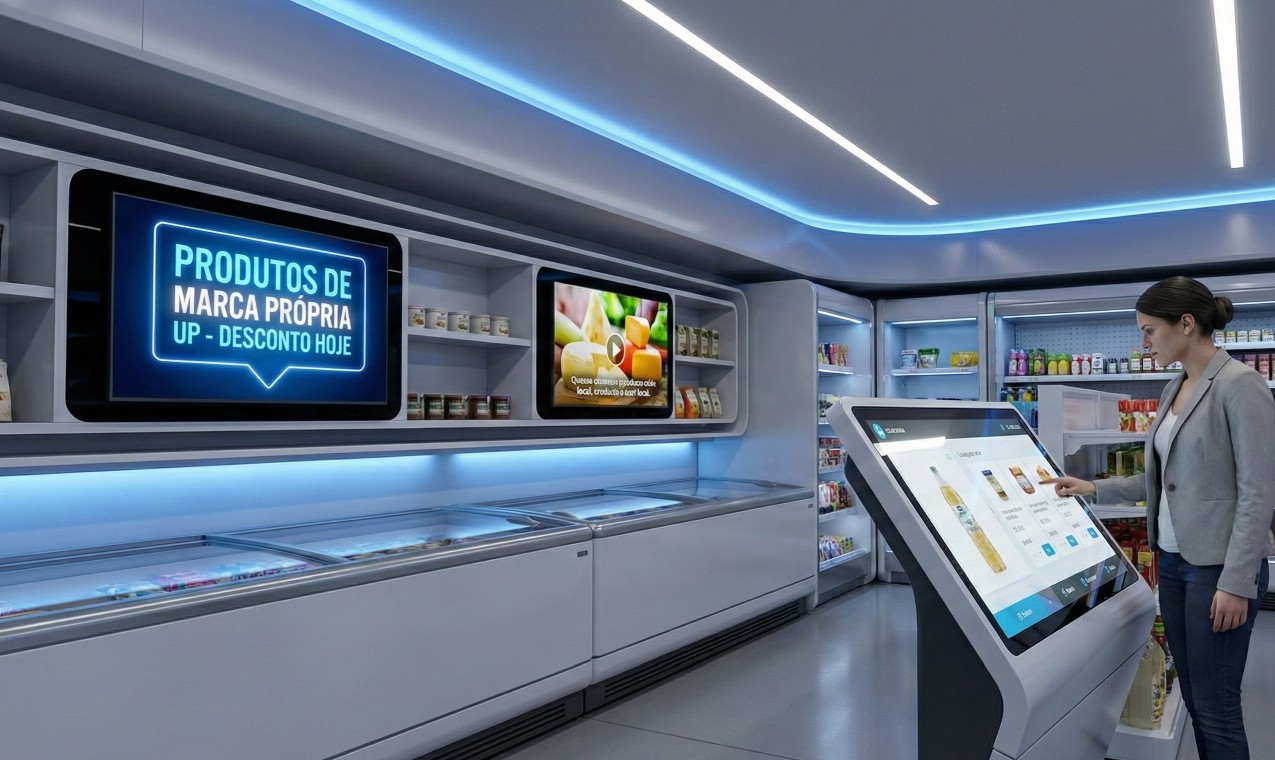
Totens e Painéis Interativos: Equipados frequentemente com sistemas Android ou System-on-Chip (SoC), oferecem flexibilidade para uso interior e exterior (alto brilho).
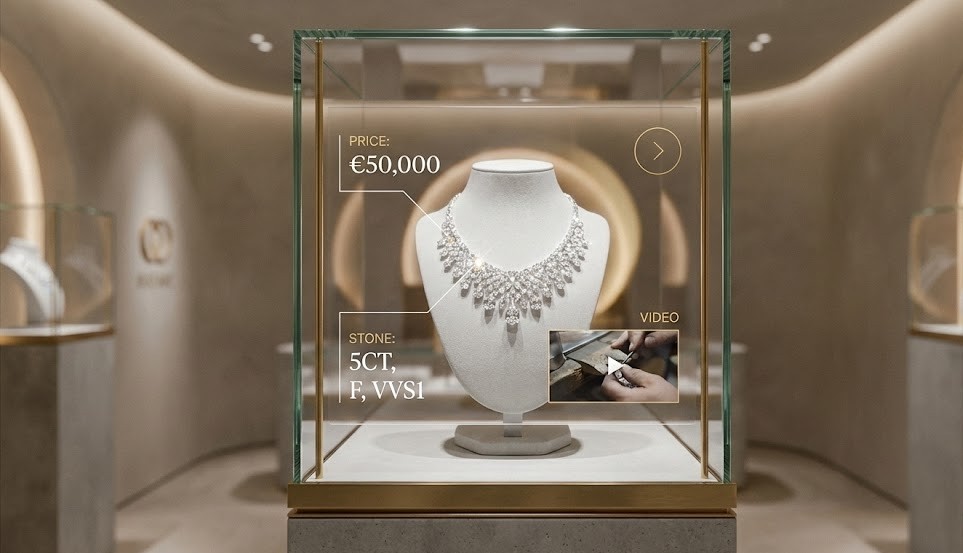
LCD Transparente: Uma tendência forte para 2026, estas caixas permitem sobrepor informação digital (preço, specs) a um produto físico real, sendo a escolha preferencial para showrooms de luxo e joalharias.
Com o hardware definido, como se gere o conteúdo de forma eficiente?
Como otimizar a comunicação com Software de Digital Signage?
A otimização da comunicação empresarial depende da integração de um CMS (Sistema de Gestão de Conteúdos) que suporte automação e, idealmente, IA para ajuste dinâmico de mensagens. O "Digital Signage" moderno evoluiu para integrar TV Corporativa e redes de publicidade programática (pDOOH). Em Portugal, soluções de software como o Visibble Display permitem controlar remotamente redes de ecrãs complexas, garantindo que o conteúdo certo chega ao público certo. Empresas como a Wost.pt destacam-se pela versatilidade na implementação de hardware portátil, crucial para restaurantes e centros comerciais que necessitam de atualizar menus e promoções várias vezes ao dia sem custos técnicos.
E como deve ser feita a implementação para garantir o ROI?
Como implementar uma estratégia visual que converte?
Para maximizar o ROI, instale os displays em zonas de "tempo morto" (filas, elevadores) e utilize Calls-to-Action (CTAs) curtos que incentivem uma ação imediata. Evite encher o ecrã de texto. Em 2026, a regra é a densidade visual:
Dados Comparativos: Use infográficos simples (ex: "Digital vs. Papel: -40% custos operacionais").
Prova Social: Exiba fotos de instalações reais ou testemunhos em rotação.
Contexto Local: "Visite a Wost.pt para uma demo". A utilização de palavras-chave de cauda longa nos metadados das imagens e nos descritivos dos vídeos (ex: "ecrãs para montras em Lisboa") ajudará ainda a captar tráfego orgânico local para o seu negócio.