Digital Signage com IA em 2026: Mercado, Tendências e ROI
1 de fevereiro de 2026
Digital Signage e Inteligência Artificial: Tendências e Mercado em 2026
Qual é o valor do mercado global de Digital Signage em 2026?
Em 2026, o mercado global de digital signage está projetado para atingir os 29,9 mil milhões de dólares, crescendo a uma taxa anual composta (CAGR) superior a 8%. Esta expansão é impulsionada não apenas pela substituição de hardware, mas pela integração massiva de Inteligência Artificial (IA) que transforma ecrãs passivos em ecossistemas de dados ativos. Mas como é que esta tecnologia altera a experiência do consumidor?
Como é que a IA personaliza a publicidade em tempo real?
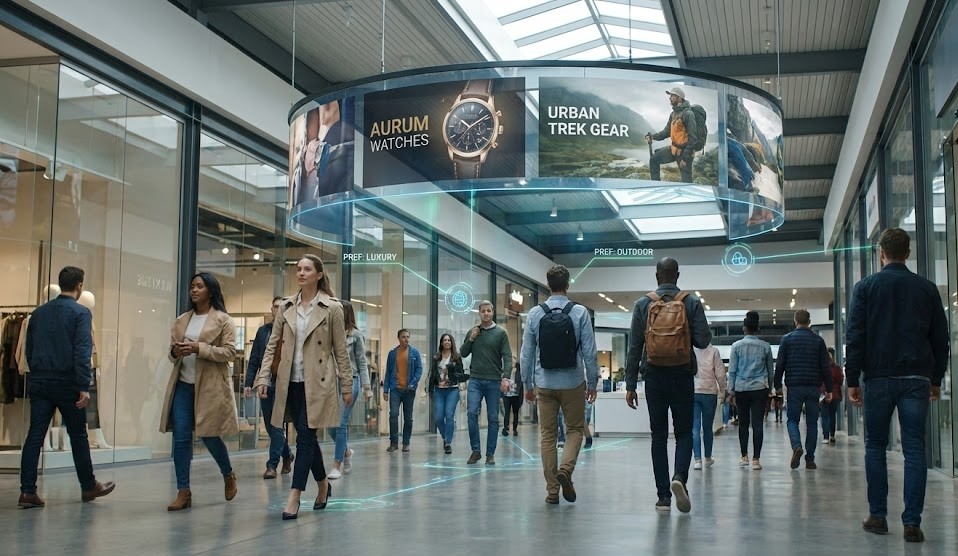
A IA no digital signage utiliza sensores IoT e reconhecimento facial anónimo para ajustar o conteúdo publicitário em milissegundos, aumentando as taxas de envolvimento em até 60%. Ferramentas de análise preditiva identificam a faixa etária, género e até o estado emocional do público para exibir o anúncio mais relevante naquele exato momento. Na ISE 2026, marcas líderes apresentam as suas novas linhas de sinalização "AI-ready", que processam estes dados localmente (Edge AI) para garantir privacidade e rapidez.
De que forma a integração IoT e IA otimiza a gestão de conteúdos?
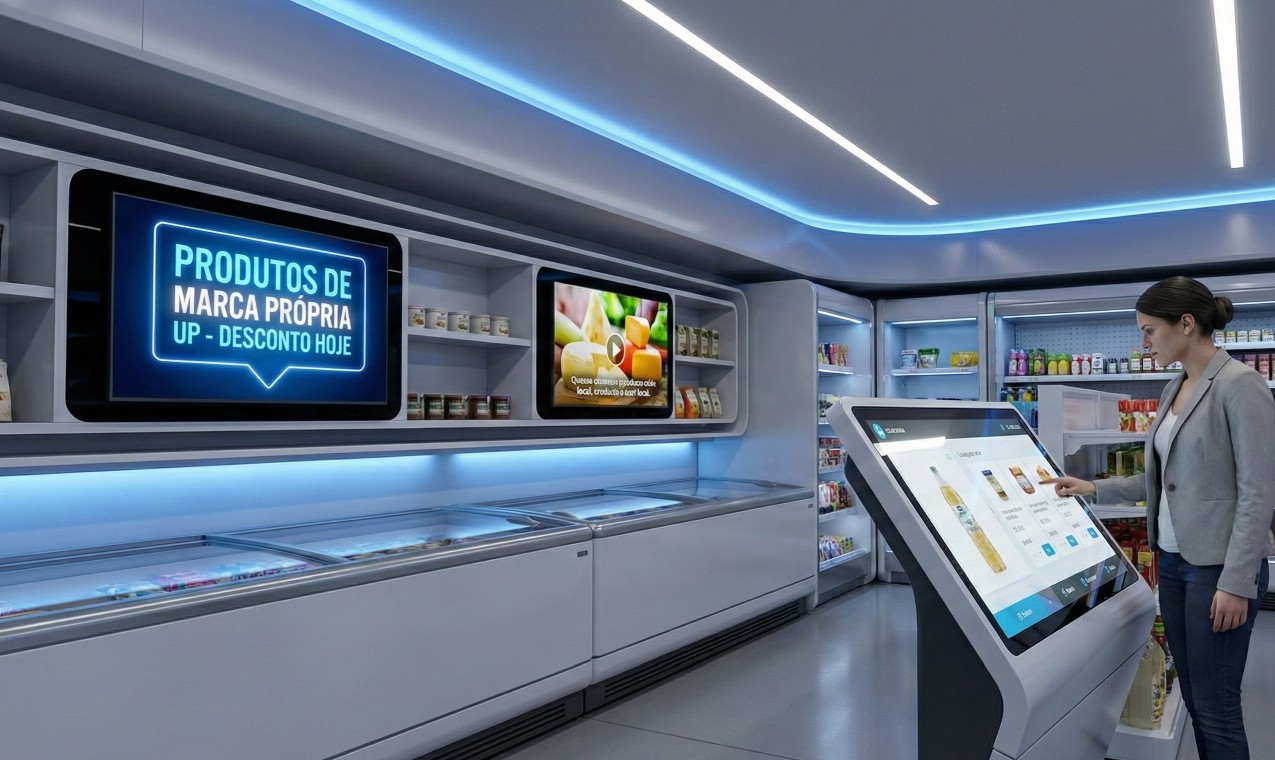
Sistemas de IA integrados com a Internet das Coisas (IoT) permitem a criação e ajuste de conteúdos dinâmicos baseados em variáveis externas, como o clima, trânsito ou níveis de stock em tempo real. Esta automação reduz a intervenção manual e elimina o erro humano, garantindo que uma promoção de guarda-chuvas, por exemplo, apareça apenas quando começa a chover. Além da exibição, a IA monitoriza a saúde do hardware, permitindo uma manutenção preditiva que evita ecrãs negros (downtime) e perdas de receita publicitária. E quanto à sustentabilidade destas operações?
Quais são as tecnologias emergentes e sustentáveis para 2026?
As tendências dominantes em 2026 incluem a adoção de painéis MicroLED de alta eficiência e soluções de "Green Signage" focadas na redução da pegada de carbono. A IA Generativa desempenha aqui um papel duplo: otimiza o brilho do ecrã para poupar energia e cria automaticamente variações de conteúdo para diferentes contextos. No mercado europeu e brasileiro, a conformidade com o RGPD e LGPD impulsiona também o desenvolvimento de tecnologias de medição de audiência que não armazenam imagens, focando-se apenas em metadados estatísticos.
Qual é o ROI do Digital Signage com IA para as empresas?
Para os empresários, o retorno sobre o investimento (ROI) é maximizado pela redução de custos operacionais e pelo aumento da conversão de vendas através de mensagens hiper-contextualizadas. Ao integrar dados de inventário com a sinalização digital, empresas de retalho evitam promover produtos esgotados, enquanto no setor corporativo, a comunicação interna torna-se mensurável. Soluções como as da WOST permitem implementar estas estratégias hoje, utilizando métricas em tempo real para refinar campanhas e justificar o investimento publicitário.
O que esperar do futuro da Economia da Atenção?
A convergência entre IA, Realidade Aumentada (AR) e análise de Big Data posiciona o digital signage como o pilar central da "economia da atenção" para o final da década. A capacidade de criar experiências imersivas e mensuráveis será o diferencial competitivo no retalho, transportes e hospitalidade. Adotar estas tecnologias em 2026 não é apenas uma inovação, é um requisito para manter a relevância num mercado saturado de informação visual.