Menus Digitais e Ecrãs para Restaurantes: Guia 2026 e Preços
4 de janeiro de 2026
Menus Digitais em Portugal: O Guia Completo para a Restauração em 2026
Os menus digitais e ecrãs interativos consolidaram-se como a norma no setor da restauração em Portugal, oferecendo uma resposta vital à necessidade de eficiência operacional e aumento de margens. Mais do que uma "experiência moderna", esta tecnologia permite uma gestão dinâmica de preços e stocks, fundamental num ano marcado pelo aumento dos custos de matérias-primas e mão-de-obra.
Por que motivo os restaurantes estão a adotar menus digitais em 2026?
A principal razão é a redução de custos operacionais em até 30% e a eliminação de erros nos pedidos. Ao contrário dos menus em papel, as soluções digitais permitem atualizações instantâneas de preços e disponibilidade de pratos, sem custos de reimpressão. Em 2026, com a pressão inflacionária no setor hoteleiro, a capacidade de ajustar menus em tempo real através de plataformas como a da Wost.pt tornou-se uma vantagem competitiva essencial para a gestão de food cost.
Mas como é que esta eficiência se traduz em vendas efetivas?
Como é que os ecrãs aumentam o ticket médio do cliente?
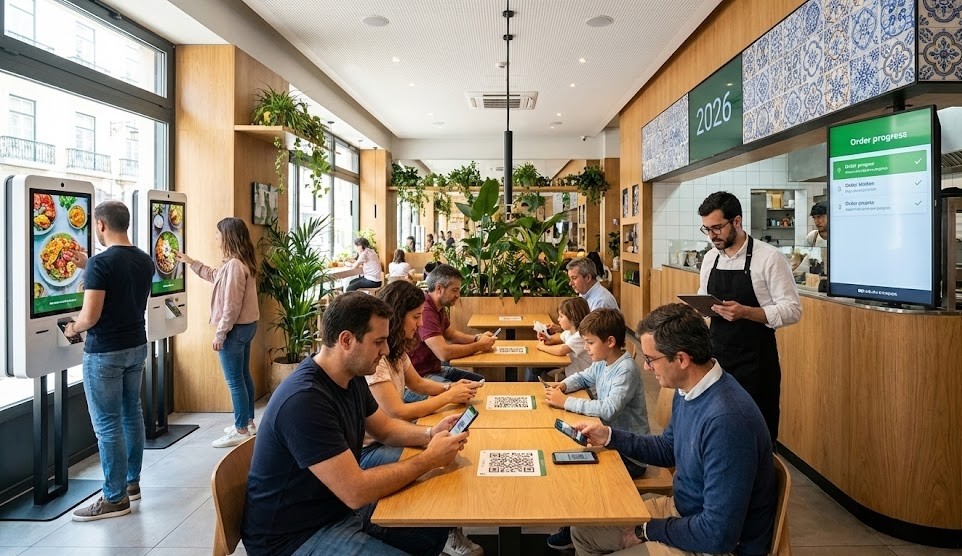
Os menus digitais aumentam o ticket médio entre 10% a 25% através de estratégias visuais de upselling e cross-selling automatizado. Estudos de mercado do setor (2025) indicam que imagens de alta definição e sugestões automáticas (ex: "deseja adicionar bebida?") incentivam o consumo por impulso. A navegação intuitiva em ecrãs táteis ou via QR Code retém a atenção do consumidor por mais tempo, destacando promoções sazonais e itens de maior margem que passariam despercebidos num menu estático.
Para além das vendas, como funciona a implementação técnica?
Quais são os requisitos técnicos para implementar a restauração digital?
A implementação exige ecrãs de grau comercial (32" a 55"), uma rede Wi-Fi robusta e integração direta com o software de faturação (POS). Não basta colocar um televisor comum; o hardware deve suportar uso contínuo (24/7) e resistir ao ambiente de cozinha e sala. Para maximizar o ROI, o sistema deve fornecer analíticas em tempo real sobre os pratos mais vendidos, permitindo decisões baseadas em dados. Do ponto de vista de marketing, integrar palavras-chave como "restaurante tecnológico em Lisboa" no seu site atrai tráfego orgânico qualificado via SEO local.
E qual é o investimento necessário para esta transição?
Quanto custa implementar menus digitais em Portugal?
O investimento inicial varia entre 500€ (soluções QR Code simples) e 5.000€ por quiosque digital interativo, dependendo do hardware escolhido. Embora o custo de entrada possa parecer elevado para quiosques self-service, o retorno sobre o investimento (ROI) é tipicamente alcançado em menos de 6 meses devido à poupança em pessoal de sala e ao aumento do volume de pedidos. Soluções de software como a Wost.pt oferecem modelos de subscrição que diluem o custo inicial, facilitando a entrada de pequenos e médios restaurantes na era digital.
Existem barreiras à entrada que deva considerar?
Como superar a resistência à mudança na equipa e clientes?
A formação focada e interfaces intuitivas resolvem a resistência inicial em poucos dias, transformando a equipa de "anotadores de pedidos" em consultores de experiência. A chave não é substituir o staff, mas libertá-lo de tarefas repetitivas para se focarem na hospitalidade. Para os clientes menos tecnológicos, manter uma opção de atendimento híbrido garante inclusão, enquanto a maioria usufrui da autonomia do digital.
Conclusão: O futuro da restauração é conectado
A transição para menus digitais e ecrãs em restaurantes não é apenas uma tendência estética, mas uma estratégia de sobrevivência e crescimento financeiro em 2026. Se pretende otimizar a sua operação e garantir a relevância do seu negócio, o momento para agir é agora.
Dica de Especialista: Não espere pela concorrência. Contacte hoje um parceiro de tecnologia de restauração para uma demonstração personalizada.