Neuromarketing e Digital Signage 2026: Captar Atenção em 3s
3 de fevereiro de 2026
Neuromarketing e Digital Signage em 2026: A Ciência de Captar a Atenção
O Neuromarketing e o Digital Signage revolucionaram a comunicação visual, tornando-se a única forma eficaz de quebrar o ruído em ambientes saturados. Numa era onde a "Economia da Atenção" dita o sucesso, combinar neurociência com ecrãs inteligentes não é uma opção, é uma necessidade para garantir que a sua marca é processada pelo cérebro do consumidor.
Porque é que a "Regra dos 3 Segundos" é vital em 2026?
A atenção humana em ambientes comerciais é decidida em menos de 3 segundos, com o cérebro a filtrar subconscientemente 99% dos estímulos visuais que não evocam emoção ou utilidade imediata.
Estudos de mercado de 2025 indicam que a janela de oportunidade encolheu. Enquanto o Digital Signage capta 400% mais visualizações do que a sinalização estática, a retenção depende da rapidez com que o conteúdo ativa o sistema límbico (o centro emocional do cérebro). Se o seu conteúdo não gerar uma resposta de dilatação pupilar ou micro-expressão de interesse nos primeiros instantes, o consumidor seguirá em frente.
Mas como garantimos que o cérebro escolhe olhar para o nosso ecrã?
Como é que a Neurociência guia o olhar do consumidor?
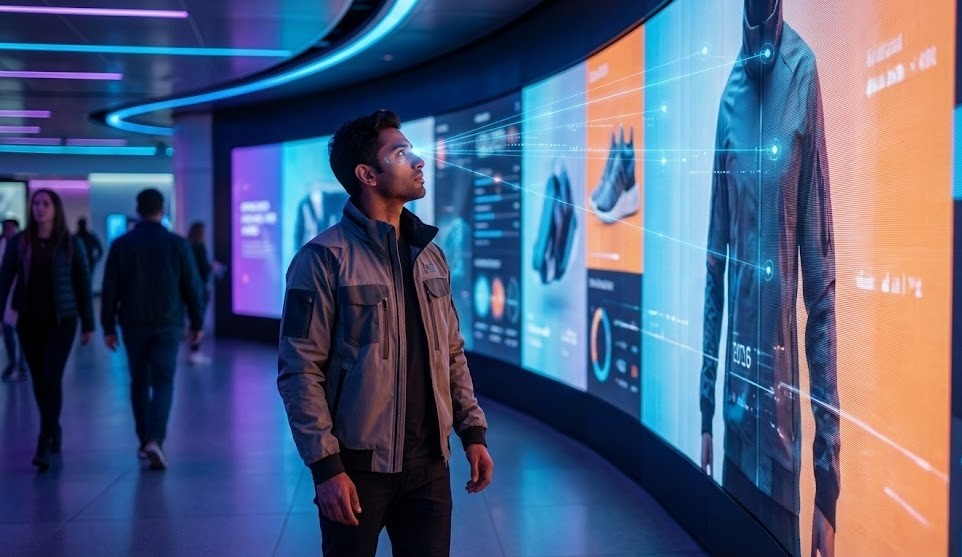
O cérebro humano está programado biologicamente para priorizar rostos, movimento e padrões de alto contraste, utilizando ferramentas como o eye tracking para mapear e otimizar estas fixações.
A neurociência aplicada à publicidade visual revela que o olhar não é aleatório; ele segue padrões previsíveis (como o padrão em "F" ou "Z"). Em 2026, a integração de IA Preditiva permite ajustar layouts dinamicamente. Por exemplo, colocar o Call-to-Action (CTA) no "Triângulo Dourado" (a zona central-esquerda onde o olhar recai naturalmente) pode aumentar a taxa de conversão significativamente. Vídeos com storytelling emocional, adaptados via IA, mantêm o espectador preso à narrativa, transformando a observação passiva em engagement ativo.
Sabendo como o cérebro funciona, que táticas podemos aplicar imediatamente?
Que estratégias práticas maximizam a conversão em Ecrãs Digitais?
As estratégias mais eficazes combinam cores de ativação rápida, movimento fluido e personalização contextual via Inteligência Artificial.
Para dominar o neuromarketing digital signage, implemente estas três táticas comprovadas:
Cores e Contraste Neural: Utilize vermelho e amarelo para promoções de impulso (ativam a urgência) e azul para confiança. O contraste elevado entre texto e fundo facilita o processamento cognitivo rápido.
Movimento Dinâmico (Cinemagraphs): Não use vídeos longos. Animações curtas e em loop (2-5 segundos) criam uma sensação de "urgência visual", aumentando as fixações oculares em mais de 25%.
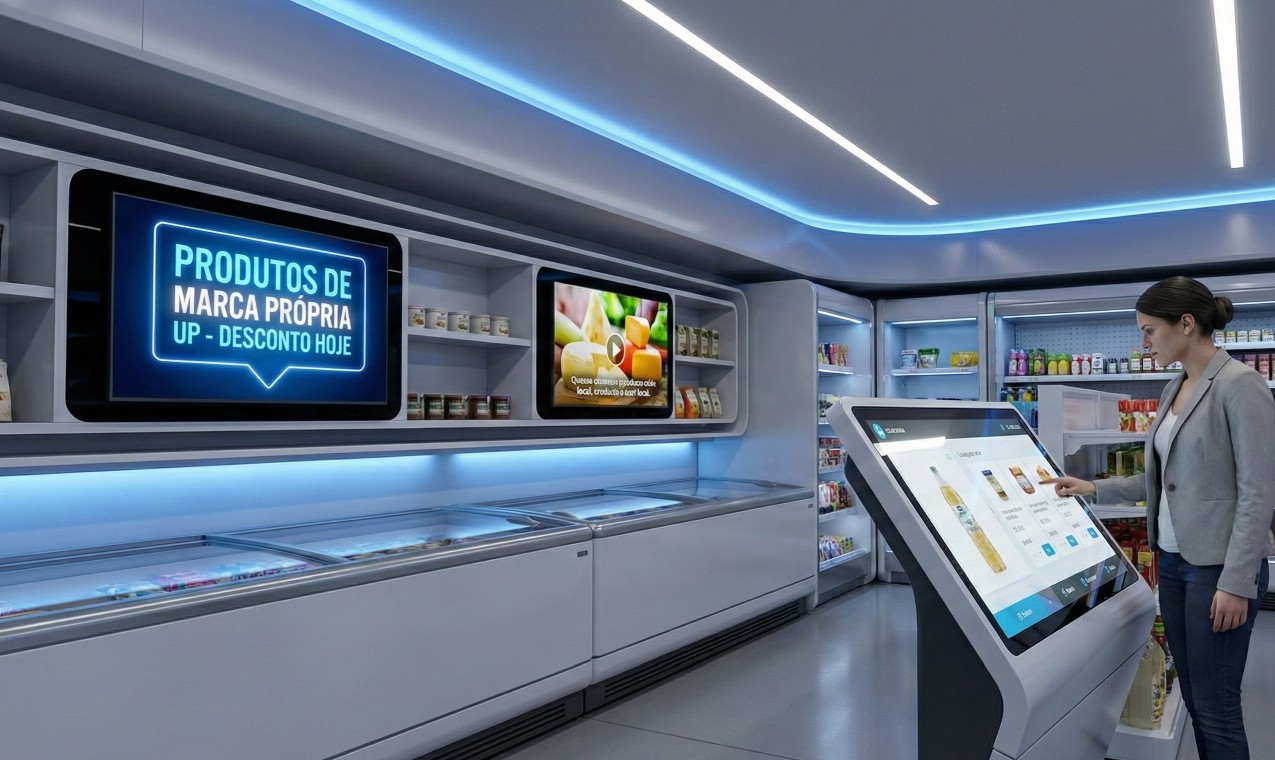
Hiper-Personalização (Context-Aware): A grande tendência de 2026. Utilize plataformas que ajustam o conteúdo em tempo real baseadas em triggers externos (meteorologia, hora do dia) ou demografia da audiência presente (via sensores anónimos), entregando a mensagem certa à pessoa certa.
E depois de implementar, como sabemos se está a funcionar?
Como medir o ROI com Métricas de Atenção (Attention Metrics)?
A medição de sucesso evoluiu dos simples "cliques" para métricas biométricas avançadas, como o Tempo de Permanência do Olhar (Dwell Time) e a Análise de Sentimento.
Os analytics tradicionais são insuficientes para o mundo físico. O neuromarketing moderno utiliza heatmaps de atenção gerados por IA para revelar exatamente onde os clientes olham e o que ignoram. Marcas líderes utilizam estes dados para realizar testes A/B em tempo real, otimizando campanhas que chegam a gerar 20-30% mais conversões do que a média do setor. Para gestores de marketing, o foco deve estar em softwares que forneçam dados sobre a "Qualidade da Atenção", e não apenas o número de passagens.
Próximos Passos: Como auditar a sua estratégia visual?
Implemente uma auditoria de atenção visual hoje mesmo. Comece por testar os seus criativos atuais com ferramentas de simulação de eye-tracking (baseadas em IA) antes de os lançar. Contacte especialistas em Digital Signage para integrar soluções que reagem ao comportamento do consumidor e transforme os seus ecrãs em ativos de alta performance.