Conectividade Digital Signage 2026: WiFi, 5G ou Ethernet PoE?
5 de fevereiro de 2026
Conectividade em Digital Signage: Deve Escolher WiFi, 5G ou Ethernet?
A escolha da conectividade em 2026 não é apenas sobre "estar online"; é sobre segurança, autonomia e gestão de energia. Este guia analisa as opções de WiFi 6/7, 5G-Advanced e Ethernet (PoE++), ajudando decisores de IT a blindar os seus investimentos em sinalização digital.
O WiFi é fiável para operações críticas de Digital Signage?
Sim, mas apenas se utilizar normas recentes (WiFi 6/7) e protocolos de segurança WPA3; caso contrário, o risco de interferência é elevado.
Embora o WiFi ofereça flexibilidade de instalação sem obras, em 2026 a congestão de espectro em áreas comerciais continua a ser o maior inimigo do uptime. Para mitigar riscos, não partilhe a rede de convidados (Guest WiFi) com os ecrãs. Priorize redes dedicadas na banda de 6GHz e garanta que os seus media players suportam a gestão de tráfego inteligente para evitar buffering em conteúdos 4K/8K.
E se o local não permitir uma infraestrutura de rede robusta?
Quando se justifica o investimento em 4G ou 5G-Advanced?
Sempre que a segurança corporativa exigir "Network Independence" ou em locais sem infraestrutura cablada.
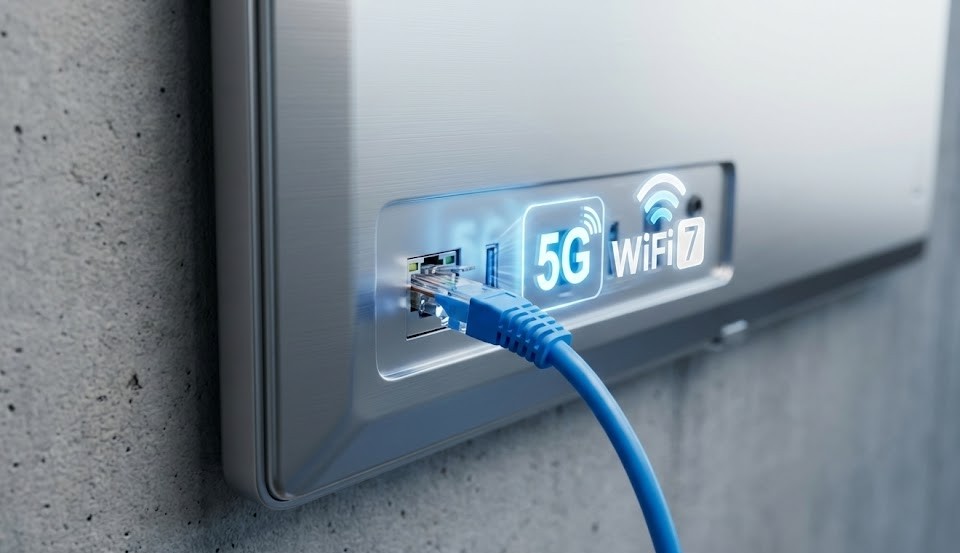
Em 2026, a conectividade móvel já não é apenas um "backup". O uso de routers 5G industriais permite criar uma rede "air-gapped" (totalmente separada da LAN da empresa), o que elimina riscos de cibersegurança para a rede corporativa principal — um requisito crescente para conformidade SOC 2. Com o 5G-Advanced, a latência rivaliza com a fibra, tornando-o viável para quiosques interativos e conteúdos em tempo real, embora exija gestão de custos de dados (via eSIMs multi-operadora).
Mas qual é a opção que garante a máxima estabilidade e eficiência energética?
O Cabo Ethernet (PoE) ainda é a melhor escolha técnica?
Absolutamente, o Ethernet continua a ser a referência (Gold Standard) para estabilidade, segurança e, agora, sustentabilidade via PoE++.
A grande vantagem em 2026 não é apenas a transmissão de dados, mas a capacidade de alimentar ecrãs de maior dimensão (até 90W) através do mesmo cabo de rede (Power over Ethernet), eliminando a necessidade de tomadas elétricas adicionais. Isto reduz drasticamente os custos de instalação e consumo energético. Para IT Managers, o cabo garante latência zero e atualizações de segurança instantâneas, sem as variáveis ambientais que afetam o sem-fios.
Comparativo Técnico: WiFi vs. 5G vs. Ethernet (2026)
Critério | WiFi (Norma 6/7) | 5G / 4G LTE | Ethernet (PoE++) |
Instalação | Rápida, sem cabos físicos. | "Plug & Play" com eSIM. | Complexa (requer cablagem). |
Estabilidade | Média (sujeito a interferência). | Alta (com redundância multi-SIM). | Máxima (blindado a falhas). |
Segurança | Depende da gestão (WPA3). | Alta (Isolamento da LAN). | Total (Acesso físico necessário). |
Custo Inicial | Baixo (infraestrutura existente). | Médio (Router Industrial). | Médio-Alto (Switch + Cabos). |
Sustentabilidade | Neutra. | Baixa (consumo do modem). | Alta (Gestão de energia centralizada). |
Uso Ideal | Átrios com sinal forte. | Montras, Transportes, Segurança IT. | Edifícios Corporativos, Videowalls. |
Como gerir estas conexões quando a rede falha?
Como funcionam os sistemas modernos na gestão de falhas?
Os sistemas modernos de gestão de rede monitorizam em tempo real a qualidade da ligação e conseguem alternar automaticamente entre Ethernet, Wi‑Fi e 5G para reduzir o risco de falhas visíveis no ecrã. Ao contrário dos antigos modelos de failover puramente reativos, as soluções atuais usam algoritmos de análise de desempenho para detetar sinais de instabilidade na ligação principal e migrar o tráfego de forma mais suave para uma ligação secundária sempre que possível. Isto ajuda a minimizar interrupções em funcionalidades críticas, como atualizações de preços em tempo real ou alertas de emergência. A conectividade passou a ser tratada como um ‘fabric’ híbrido, definido e orquestrado por software, em vez de uma escolha estática e rígida de hardware.
Recomendação Final para 2026
Para a máxima resiliência, a arquitetura recomendada hoje é híbrida: Ethernet (PoE++) como primário para eficiência energética, com 5G como backup autónomo para garantir continuidade e acesso remoto "Out-of-Band" em caso de falha da rede local.