Manual de Identidade Visual: O Que É e Como Criar (2026)
28 de dezembro de 2025
Manual de Identidade Visual: O Que É e Como Criar (Guia 2026)
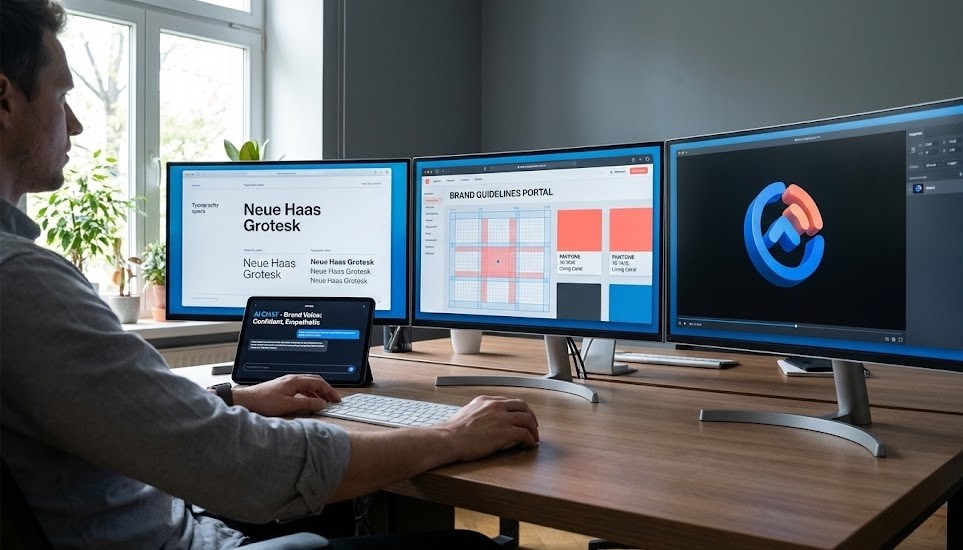
Um Manual de Identidade Visual (ou Brand Guidelines) é um documento técnico estratégico que normaliza todos os códigos visuais, verbais e comportamentais de uma marca, assegurando a consistência da identidade de marca. Mais do que um PDF com logótipos, em 2026, ele atua como o sistema operativo da empresa, garantindo que a comunicação se mantém coerente, seja num outdoor, numa app móvel ou numa resposta gerada por Inteligência Artificial.
O que é exatamente um Manual de Identidade Visual?
É um guia normativo que dita as regras de aplicação da marca para assegurar coerência em todos os pontos de contacto. O manual, muitas vezes alojado em "Brand Portals" digitais em vez de ficheiros estáticos, define explicitamente o que é permitido e o que é proibido no uso do logótipo, tipografia, paleta cromática e tom de voz. O objetivo primário é eliminar a ambiguidade para designers, equipas de marketing e algoritmos, protegendo o valor do património da identidade de marca.
Porque é que a minha empresa precisa de Brand Guidelines?
A consistência da marca aumenta a receita em até 23% e fortalece o reconhecimento imediato pelo consumidor. Sem um manual claro, a marca sofre de fragmentação visual, o que dilui a confiança do cliente e transmite amadorismo. Além do impacto financeiro, um manual bem definido acelera a produção de conteúdos (Time-to-Market), pois as equipas não perdem tempo a "reinventar a roda" a cada nova campanha, tendo regras claras de design e comunicação já aprovadas.
O que deve incluir um Manual de Marca completo em 2026?
Para além do básico, um manual moderno deve cobrir a experiência digital e interativa, integrando todos os elementos da identidade de marca. Os elementos essenciais são:
Diretrizes de Marca (Estratégia): Missão, Visão, Valores e o "Big Idea" da marca.
Identidade Visual Base: Regras de segurança do logótipo, paleta de cores (RGB, CMYK, HEX e Pantones) e hierarquia tipográfica são fundamentais para a identidade de marca.
Motion & Interação: Definição de como a marca se "move" (transições, velocidade de animação, todos os elementos gráficos devem ser considerados). loaders) — crucial para vídeo e interfaces digitais.
Acessibilidade (WCAG): Regras de contraste e legibilidade para garantir que a marca é inclusiva.
Tom de Voz & IA: Exemplos de frases que ajudam a definir a identidade de marca. on-brand e off-brand, e especificações de prompts para garantir que ferramentas de IA escrevam com a personalidade da empresa.
Como criar um Manual de Identidade Visual passo a passo?
A criação de um manual eficaz segue um processo de quatro etapas lógicas, partindo da estratégia para a execução visual:
Diagnóstico e Estratégia: é um documento crucial para definir a identidade de marca. Antes de desenhar, defina a personalidade da marca (ex: rebelde, cuidadora, especialista). Entenda o público-alvo e onde a marca vai "viver" (mais no Instagram ou no LinkedIn?) para fortalecer a sua identidade de marca.).
Desenvolvimento dos Ativos: Crie ou refine os elementos visuais (logo, cores, tipos) garantindo que funcionam em escalas mínimas (ex: favicons ou ícones de apps).
Documentação das Regras: é um manual de identidade que orienta todos os elementos da marca. Escreva as regras de uso dos materiais de marketing para garantir a coerência da identidade de marca. Seja visual: mostre exemplos de "Faça isto" vs. "Não faça isto".
Distribuição Centralizada: Em 2026, evite PDFs pesados. Utilize plataformas de gestão de marca na nuvem (Brand Centers são essenciais para a construção e manutenção da identidade de marca.) para que as atualizações sejam imediatas para toda a equipa.
Como manter o Manual de Marca atualizado?
A manutenção deve ser encarada como um processo contínuo (Evergreen), com revisões recomendadas a cada 12 a 18 meses. O mercado muda rapidamente; se a sua marca entrou no TikTok ou começou a usar agentes de IA para apoio ao cliente, o manual deve ser atualizado para regrar esses novos canais. Um manual estático torna-se obsoleto, enquanto um manual vivo evolui com as tendências tecnológicas e as necessidades do negócio.
Exemplos de Sucesso: O que podemos aprender com grandes marcas?
Marcas líderes como a Apple, Spotify ou Nike distinguem-se não pela complexidade, mas pela rigidez na aplicação das suas regras simples.
Consistência Radical: todos os elementos da identidade de marca devem ser aplicados uniformemente. A Apple mantém a mesma linguagem minimalista e tipografia limpa há décadas, criando um "ecossistema visual".
Adaptabilidade: O Spotify utiliza um sistema de cores dinâmico que se adapta à capa do álbum, mas mantém a estrutura do logotipo da marca intacta. A lição para a sua empresa é: defina regras rígidas para o "núcleo" da marca (logo, voz), mas permita flexibilidade nas "margens" (campanhas sazonais) para manter a frescura.