Digital Signage em Centros Comerciais: Guia e Tendências 2026
8 de dezembro de 2025
Digital Signage para Centros Comerciais em Portugal: Guia de Estratégia e ROI (2026)
O digital signage para centros comerciais é uma infraestrutura de comunicação que utiliza ecrãs interativos, video walls e quiosques digitais para gerir o fluxo de visitantes e monetizar espaços comuns. Em Portugal, esta tecnologia evoluiu de simples ecrãs informativos para ecossistemas geridos por Inteligência Artificial, essenciais para a competitividade de espaços de grande afluência.
Porque é que o digital signage é essencial para os centros comerciais modernos?
O digital signage aumenta o tempo de permanência e o valor médio das compras através de uma comunicação visual dinâmica e contextual. Ao substituir a cartolina estática por ecrãs digitais, os gestores conseguem alterar mensagens em tempo real, adaptando-se a eventos ou promoções relâmpago. Dados de mercado de 2025 indicam que a implementação estratégica destes sistemas em grupos como a Sonae e a Mundicenter resultou num aumento de vendas de produtos promovidos entre 15% a 20%.
Mas, para além das vendas, como é que esta tecnologia resolve problemas logísticos?
Como é que o wayfinding digital melhora a experiência do visitante?
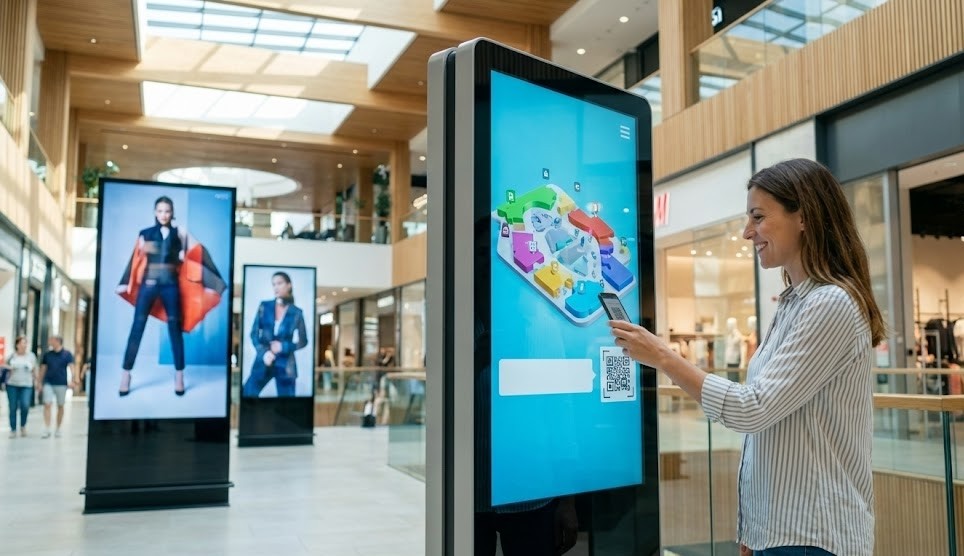
Os sistemas de wayfinding digital reduzem o tempo de orientação em 30% e diminuem drasticamente as queixas nos balcões de informação. Em grandes superfícies como o UBBO ou o Alegro, mapas 3D interativos e diretórios touch-screen guiam o consumidor até à loja, serviço ou lugar de estacionamento desejado. A integração atual permite que o utilizador transfira a rota do mupi digital diretamente para o seu smartphone via QR Code, criando uma jornada híbrida e sem atritos ("phygital").
Com dezenas de ecrãs espalhados, surge a questão: é complexo gerir todo este conteúdo?
Como gerir redes de ecrãs em escala de forma eficiente?
A gestão é centralizada e automatizada através de plataformas CMS (Content Management Systems) baseadas na cloud. Soluções utilizadas em Portugal, como as da tecnológica WOST, permitem que uma única equipa controle centenas de ecrãs remotamente. Em 2026, a norma é a integração com sensores IoT e beacons: se um sensor deteta um aumento de tráfego numa zona de restauração, o sistema aciona automaticamente menus ou promoções específicas para aquele público, otimizando a comunicação em picos como a Black Friday.
E do ponto de vista financeiro, qual é o retorno real?
Qual é o ROI da publicidade digital (DOOH) em shoppings?
O retorno sobre o investimento (ROI) é tipicamente alcançado entre 6 a 12 meses, impulsionado pela venda de espaço publicitário a terceiros. Os ecrãs de Digital Out-of-Home (DOOH) transformaram os corredores em ativos imobiliários digitais de alta rentabilidade. Com a introdução da publicidade programática, os anunciantes podem comprar slots em tempo real baseados em audiências reais, e não estimadas. Relatórios de visualização precisos, garantidos por métricas de computer vision (anónimas e conformes ao RGPD), validam o investimento dos lojistas e geram receita incremental para o condomínio.
Quais são as tendências de digital signage para 2026 em Portugal?
A Inteligência Artificial Generativa e a Realidade Aumentada (RA) são os novos standard para interação e personalização.
Hiper-personalização: A IA analisa padrões de fluxo para sugerir conteúdos (ex: publicidade a guarda-chuvas quando chove lá fora, dados obtidos via API meteorológica).
Gamificação: Pesquisas recentes confirmam que mais de 60% dos consumidores reconhecem influência positiva das vitrines organizadas no seu comportamento de compra, com 32% mais propensos a entrar em lojas com layouts atrativos.
Para modernizar o seu espaço, o primeiro passo é uma auditoria técnica. Contacte especialistas para desenhar uma infraestrutura que transforme o seu centro comercial num hub inteligente.