Devo Comprar ou Alugar Digital Signage em 2026? Guia e Custos
19 de janeiro de 2026
Devo Comprar ou Alugar Digital Signage em 2026? Guia de Decisão para Empresas
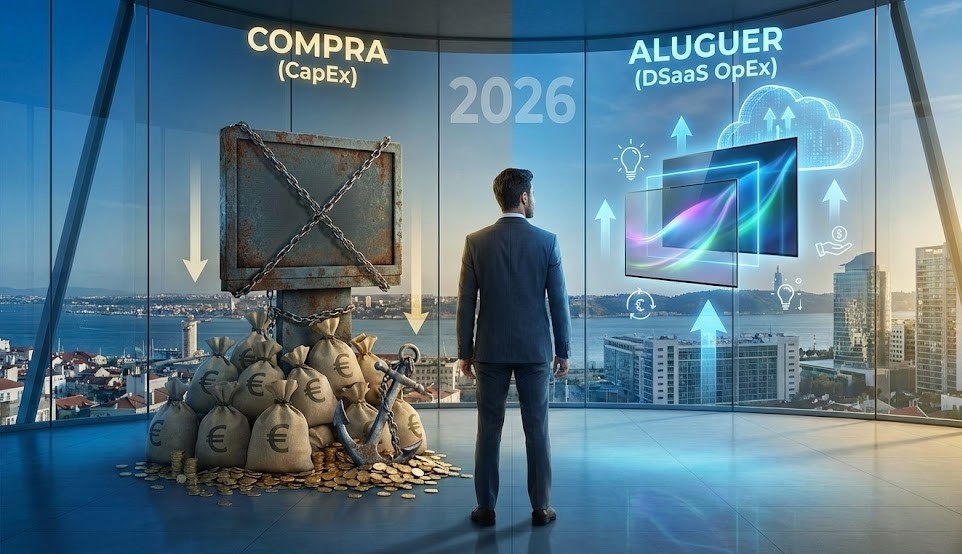
Em 2026, as montras digitais deixaram de ser apenas ecrãs para se tornarem interfaces de inteligência comercial. Para os empresários em Portugal, a dúvida persiste: a aquisição de ativos garante património, mas o modelo de subscrição oferece agilidade. Abaixo, analisamos os dados financeiros e operacionais para apoiar a sua decisão.
Quais são as vantagens de alugar Digital Signage (Renting)?
A principal vantagem do aluguer é a conversão imediata de despesas de capital (CapEx) em despesas operacionais (OpEx), preservando a liquidez da empresa. Modelos avançados de DSaaS (Digital Signage as a Service), como os oferecidos pela WOST, integram hardware, software, manutenção e renovação tecnológica numa mensalidade única. Ao eliminar o investimento inicial, as PMEs reduzem o risco de obsolescência tecnológica e os riscos operacionais em cerca de 40%. Esta modalidade permite testar campanhas em locais premium com contratos flexíveis (12 a 36 meses), sem ficar preso a equipamento que desvaloriza rapidamente.
Mas se a flexibilidade é alta, como é que isso se compara aos custos a longo prazo?
Qual a diferença de custos entre comprar e o leasing de equipamento digital?
Comprar um ecrã publicitário profissional exige um investimento inicial ("cabeça") entre 2.500€ e 10.000€, ao qual se somam custos anuais de manutenção não dedutíveis que rondam os 18% do valor do ativo. Em contrapartida, o leasing ou renting de equipamento digital inicia-se nos 120€ a 160€ mensais, sendo estas rendas 100% dedutíveis em sede de IRC para empresas em Portugal. Dados de mercado de DOOH (Digital Out-of-Home) de 2026 indicam que, num horizonte de 3 anos, o aluguer é efetivamente 25% a 30% mais económico para projetos que exigem atualização tecnológica constante.
Comparativo Rápido: Compra vs. Aluguer
Critério | Comprar Ecrã Publicitário | Alugar Digital Signage (DSaaS) |
Investimento Inicial | Alto (Impacto no Cash Flow) | Nulo ou Baixo (0€ entrada) |
Benefício Fiscal | Amortização a 4+ anos | 100% Dedutível (Despesa Corrente) |
Manutenção/Reparação | Custo extra do proprietário | Incluída no contrato (SLA definido) |
Obsolescência | Risco do proprietário | Upgrade facilitado no fim do contrato |
Sabendo os custos, em que cenários específicos deve optar por cada modalidade?
Quando devo escolher comprar ou alugar para o meu negócio?
Opte pela compra apenas se a instalação for permanente (superior a 5 anos) e o conteúdo for estático ou de baixa complexidade, garantindo o ROI através da amortização fiscal a longo prazo. Por outro lado, o aluguer de digital signage é a escolha imperativa para retalho dinâmico, feiras, pop-up stores ou campanhas sazonais (como Black Friday), onde a agilidade tecnológica provou aumentar as vendas no ponto de venda em mais de 31%. Se a sua estratégia prevê uma ocupação dos ecrãs superior a 50% do ano com campanhas variáveis, o leasing maximiza o retorno sobre o investimento e elimina custos surpresa.
Para além do modelo financeiro, que tecnologias estão a definir o mercado este ano?
Que tendências de Digital Signage dominam o mercado em 2026?
A grande tendência de 2026 é a hiper-personalização impulsionada por IA Generativa, capaz de adaptar conteúdos em tempo real baseando-se na demografia da audiência. Esta capacidade eleva as taxas de engagement para 70%, um valor inalcançável com displays estáticos antigos. Além disso, soluções nacionais (como as da WOST) estão alinhadas com o Pacto Ecológico da UE, utilizando ecrãs LED de baixo consumo energético e conetividade 5G/6G para gestão remota instantânea. O foco mudou da "exibição" para a "interação sustentável".
Conclusão: Qual o próximo passo?
O aluguer de digital signage consolida-se como a estratégia vencedora em 2026 para negócios que valorizam inovação e liquidez financeira. Em vez de imobilizar capital em ecrãs que envelhecem, invista na flexibilidade do modelo DSaaS. Recomendamos uma simulação personalizada com os nossos especialistas para desenhar uma solução que se pague a si mesma através do aumento de vendas.